
Comparing the Three Main Categories: Marine Vinyl, Leather, and Sunbrella / Marine Textiles
When boat owners in Florida start looking for the best material for boat seats, the first thing that usually comes to mind is marine vinyl — and for good reason. Vinyl has become the cornerstone of outdoor marine seating because it handles everything our climate throws at it: UV radiation, salt spray, sunscreen, humidity, and people jumping aboard in wet swimwear.
But vinyl isn’t the only material used on modern boats, and it’s definitely not the right choice for every seating area. There are two other upholstery families that play very specific roles on yachts and sport boats:
1) Marine Vinyl
The workhorse of outdoor marine seating. This is typically the true best material for boat upholstery when the seat is exposed to sun, saltwater, and constant moisture. Vinyl doesn’t absorb water, it resists fading better than almost anything else, and it stays dimensionally stable even when deck temperatures hit 150°F.
2) Leather (Natural Upholstery Hides)
Reserved for the interior of larger boats — salons, dining nooks, enclosed cabins. Leather instantly elevates the perceived value of the vessel, adds long-term comfort, and ages beautifully when cared for properly. It’s not designed for direct sunlight or weather exposure, but inside a climate-controlled cabin, leather is unmatched for luxury and durability.
3) Sunbrella / Marine-Grade Textiles (Solution-Dyed Acrylic Fabrics)
Often chosen for cabin cushions, loungers, berth mattresses, and accent areas. These fabrics breathe extremely well, stay cool to the touch, and hold their color for 10+ years even in South Florida sun. They create a “home interior” feel on a boat and are among the best material options for interior boat cushions — as long as the seating area is not constantly getting wet.
Together, these three material groups make up nearly 100% of what you see on Florida boats today. Each one shines in its own environment — vinyl outdoors, leather in protected interiors, and SDA fabrics anywhere comfort and breathability matter.
And that’s why there is no single answer to what is the best material for boat seats.
It always depends on where the seat is installed, how it will be used, and what experience the boat owner wants — maximum durability, maximum comfort, or maximum luxury.
Comparison Table — Best Material for Boat Seats Across 7 Key Factors
| Feature / Performance Metric | Marine Vinyl | Leather (CabiTop 3 Best Materials for Boat Seats ▶ Florida Guiden Use) | Sunbrella / SDA Fabrics |
| UV Resistance | 1,000–2,500 UV hours before fading | 200–500 UV hours (only indoors) | 1,500–3,000 UV hours — industry leader |
| Water Behavior | 100% water-repellent, dries instantly | Absorbs moisture slowly, safe only indoors | Absorbs water; requires ventilation to dry |
| Heat Resistance (Florida Deck Temps) | Stable up to 150–165°F | Softens at 95°F+, must stay shaded | Stable at 140°F, minimal deformation |
| Tear Strength & Stretch | High — reinforced PVC; 25–35% stronger than faux leather | Very high — collagen fiber network | Medium — 210–260 lbs warp/weft |
| Comfort Level | Firm, supportive, ideal for cockpit use | Best comfort; adapts to body temp | Soft, breathable, “home-like” feel |
| Longevity in Florida | 4–7 years in open sun | 10–20 years indoors | 7–12 years in shade or dry zones |
| Where It Performs Best | Cockpit, sunpads, helm seats | Cabins, salons, dining areas | Flybridge lounges, interior cushions, décor |
Marine Vinyl: The Best Material for Boat Seats in High-Sun, High-Moisture Environments
Marine vinyl is often misunderstood because people assume it’s just a thicker version of household vinyl. But the moment you take a boat into 95°F Florida heat, the differences become obvious. Household vinyl can’t last more than a season in South Florida. Marine vinyl, on the other hand, is engineered specifically for UV-intense, salt-heavy environments — and that’s why it remains the best material for boat seats exposed to the elements.
Unlike interior upholstery materials, marine vinyl faces an extreme workload:
- Direct UV exposure that can exceed 1,600 hours per season
- Deck temperatures reaching 150–165°F
- Constant moisture and salt crystals landing on the surface
- Pressure points and friction from daily use
- Chemicals, especially sunscreen oils, which destroy low-grade vinyl within months
To survive all of this, marine vinyl is built around four technical foundations.
Structural Strength & How the Material Behaves on a Boat
True marine vinyl is made with a reinforced PVC matrix that delivers 25–35% higher tensile strength compared to standard faux leather. This is why it holds shape over tight corners and doesn’t “thin out” under tension.
- Household vinyl can lose up to 40% of its thickness when stretched over curved areas.
- Marine vinyl typically loses only 10–12%, keeping seams strong and preventing early cracking.
This structural stability is the reason helm seats and bolsters retain their form season after season.
Real Marine Resistance: UV, Salt, Mold, and Heat
Every square foot of marine vinyl includes UV inhibitors rated for 1,000–2,500 UV hours depending on the brand (Spradling®, Morbern®, Enduratex®). In practical Florida conditions, that means 3–5 years before color fading becomes noticeable.
Compare that to standard vinyl, which begins discoloring after 200–300 UV hours — sometimes after a single summer.
Other protection features include:
- Anti-microbial treatments reducing mold growth by up to 70%
- Topcoats designed to withstand sunscreen chemicals and spill acids
- Dimensional stability even when surface temperatures exceed 150°F
This is why vinyl stays reliable in Miami and Fort Lauderdale — environments that destroy interior-grade materials in months.
Workability During Upholstery (Stretch Direction Matters More Than You Think)
Professional marine upholsterers treat vinyl like a technical material, not a simple fabric. The direction it stretches determines how long the seams will last.
Marine vinyl comes in:
- 2-way stretch — good for flat cushions
- 4-way stretch — required for complex curves, helm seats, and bolsters
- Diagonal stretch — ideal for sculpted shapes
Using the wrong stretch orientation is one of the top reasons amateur reupholstery jobs fail.
Correct material rotation can extend seam life by 30–40%.
Hidden Characteristics Clients Never See — But Professionals Always Check
Two marine vinyls can look identical but behave completely differently.
The difference usually comes from:
Topcoat Thickness
A variation of just 0.1–0.4 mm in the protective layer changes everything:
- Thin topcoats fail under sunscreen chemicals in 6–12 months
- Thicker coatings withstand friction from sun pads and high-traffic seating
Thermal Expansion & Contraction
Marine vinyl expands 2–4% under high heat. Cheap vinyl shrinks unevenly, causing seam puckering — a clear sign of low-quality upholstery.
Water Behavior
Marine vinyl does not absorb water. It stays dry even after someone sits down in wet swimwear. This single property is what makes vinyl the best material for boat seats in cockpits, helm areas, and anywhere water exposure is guaranteed.
In short:
Marine vinyl may look simple, but it’s one of the most technically advanced materials on a modern boat. Its UV stability, dimensional strength, water resistance, and ability to handle extreme Florida heat make it the undisputed best material for boat seats in outdoor environments.
Genuine Leather: When Luxury Makes It the Best Material for Boat Seats Inside Enclosed Yacht Interiors
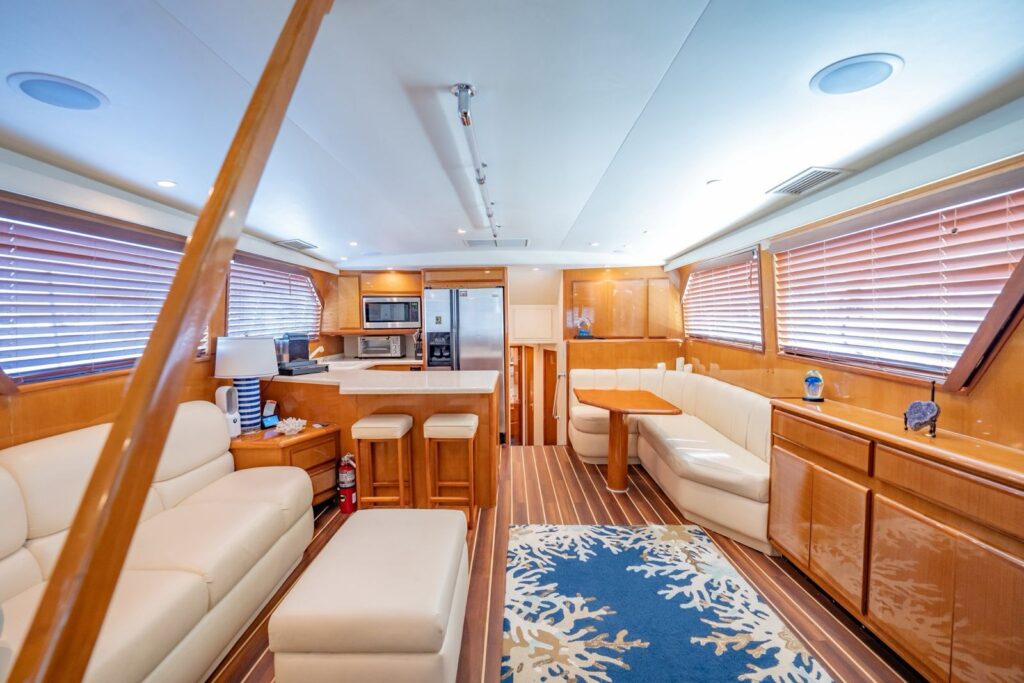
Most boat owners don’t immediately think of leather when choosing the best material for boat seats — and that’s because they’re imagining open cockpits, sun pads, and splash zones. But inside enclosed yacht interiors, leather behaves completely differently. In a climate-controlled cabin, leather becomes one of the longest-lasting, most comfortable, and most visually impactful upholstery materials you can use.
And here’s the part many owners don’t realize:
Premium upholstery leather is not the same leather used in jackets, fashion goods, or even automotive interiors. Yacht-grade leather is engineered specifically for long-term stability, controlled humidity, and luxury use.
Why Yacht Leather Starts With Completely Different Material Properties
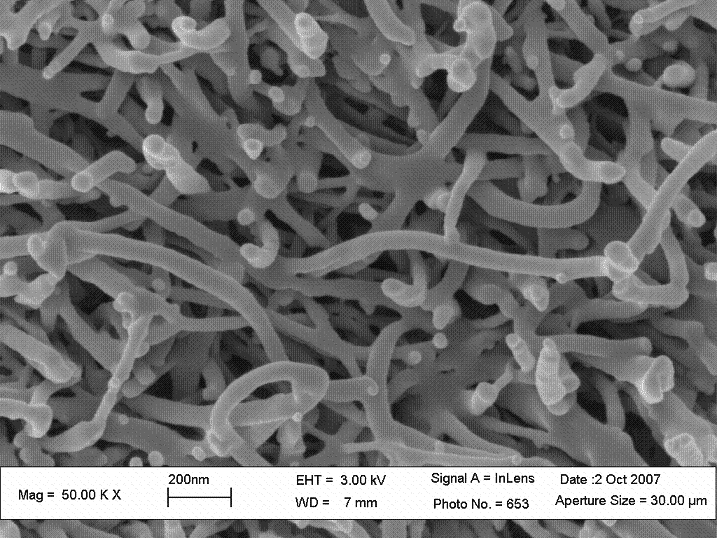
Leather gets its strength from a natural 3D collagen fiber network — something synthetics like vinyl simply cannot replicate. This fiber matrix resists stretching, compression, and deformation in all directions. But thickness and grade matter:
- Yacht upholstery hides typically measure 0.9–1.2 mm
- Fashion leather ranges from 0.6–0.9 mm, which is too thin
- Full-grain hides offer up to 40% higher tear resistance than corrected grain
This is why high-end yacht brands like Sunseeker, Princess, and Azimut continue using leather for salon seating: it maintains shape even after years of repeated sitting, leaning, and shifting.
Owners notice the difference immediately. Leather doesn’t “collapse” under body weight — it supports, distributes pressure, and ages gracefully instead of wearing out.
The Tanning Process: Science That Makes Leather Stable in Marine Cabins
Before leather ever becomes upholstery, it goes through a multi-stage transformation:
- Salting to preserve the hide
- Soaking and liming to clean and relax the fibers
- Chrome tanning to stabilize the structure
- Fatliquoring — oils added to keep the leather flexible for decades
- Pigment finishing to create marine-stable color protection
This chemistry is the main reason leather performs so well indoors.
Properly tanned upholstery leather can tolerate cabin humidity swings from 45% to 65% without stiffening or cracking — a perfect match for South Florida yachts. Lower-grade leathers begin to dry out at just 50% humidity, which is why they fail quickly.
Why Marine Interiors Use Pigment-Coated Leather, Not Aniline
Another professional insight:
- Aniline leather (soft, natural, luxurious)
→ Fades extremely fast. Not suitable for boats. - Semi-aniline
→ Better, but still sensitive to UV. - Pigmented leather (used on yachts)
→ Features a 0.05–0.15 mm protective coating that shields against stains, sunlight, and color loss.
This thin finish is the reason leather can stay beautiful for years, even with occasional UV passing through cabin windows.
For salon or stateroom seating, pigmented leather often becomes the best material for boat seats when long-term appearance and luxury are the priority.
Comfort: The One Area Where Leather Beats Everything Else
Leather has a unique ability to adapt to the person sitting on it:
- Warms to body temperature within 2–4 minutes
- Offers natural micro-ventilation
- Reduces fatigue during long passages
- Never creates the “sticky feel” that vinyl sometimes does in warm cabins
It instantly makes an interior feel more refined and more comfortable — even during multi-hour runs offshore.
Leather Can Increase Yacht Resale Value by 10–20%
This is more than a design choice — it’s a financial one.
Buyers immediately recognize a leather interior as a premium upgrade. They often describe the yacht as feeling “newer,” “cleaner,” or simply “more expensive,” even if they can’t explain why. It’s the subconscious effect of real materials and craftsmanship.
Because leather ages beautifully rather than wearing out, it remains a long-term investment rather than just upholstery.
Where Leather Should — and Should NOT — Be Used
Leather thrives in areas with predictable humidity and zero direct water exposure. It is not suitable for:
- Cockpits
- Helm seats exposed to sun
- Sun pads
- Splash zones
But it’s ideal for:
- Salon sofas
- Dining nooks
- Cabin benches
- Headboards
- Lounge seating in enclosed interiors
- Decorative panels
Used correctly, leather can last 10–20 years inside a yacht — far longer than most synthetic materials.
Sunbrella & Solution-Dyed Acrylic Fabrics: The Best Material for Boat Seat Cushions in Comfort-Focused Areas
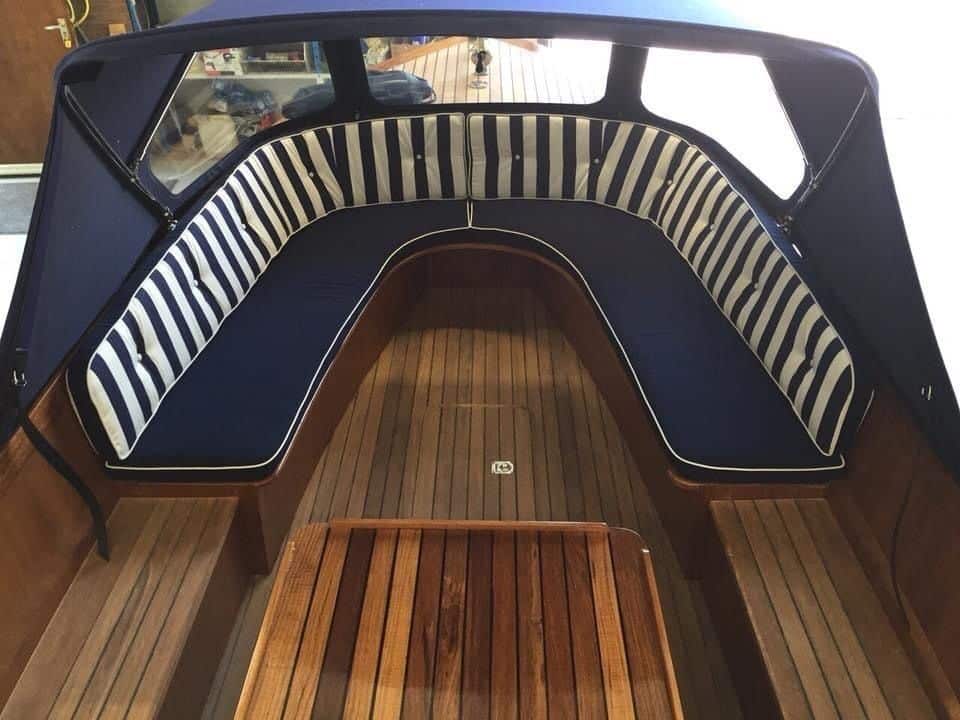
In the U.S. boating world, “Sunbrella” has become one of those words everyone uses — the same way people say “Kleenex” for tissues or “Velcro” for hook-and-loop fasteners. But professional marine upholsterers almost never use the word that casually. Instead, they use the correct technical name:
solution-dyed acrylic fabrics, often shortened to SDA fabrics.
Sunbrella is simply the most famous brand in this category, but it is not the category itself. Other premium marine fabrics — Tempotest®, Outdura®, Docril®, Para Marine Fabrics — belong to the exact same engineering family. All of them are built for long-term UV exposure, color stability, breathability, and outdoor comfort.
And here is the key distinction:
SDA fabrics are the best material for boat seat cushions in comfort-focused or semi-protected areas — but not a replacement for vinyl in wet zones.
Why SDA Fabrics Are Unique: Color Is Engineered Into the Fiber
If marine vinyl gets its strength from its PVC structure, SDA fabrics get their legendary durability from the way they are colored.
Most fabrics are dyed after weaving.
SDA fabrics are dyed before the fiber even exists.
The process works like this:
- Acrylic polymer is melted.
- Color pigments are added directly into the molten mixture.
- The colored polymer is extruded into fibers.
- Those fibers are woven into fabric.
The result is dramatic:
The color runs all the way through the fiber — not just on the surface.
This single engineering choice gives SDA fabrics advantages no other marine textile can match:
- 1,500–3,000 UV hours before noticeable fading (far beyond anything leather or standard fabric can handle)
- 7–10 years of color stability in full Florida sun
- Excellent mold resistance, because the fibers themselves do not absorb moisture
- High tear strength — often 210–260 lbs warp/weft, roughly double that of typical outdoor fabrics
This is why SDA fabrics dominate the outdoor furniture world. They simply don’t fade, rot, or fall apart like conventional fabrics.
But SDA Fabrics Are Not the Best Material for Boat Seats Everywhere
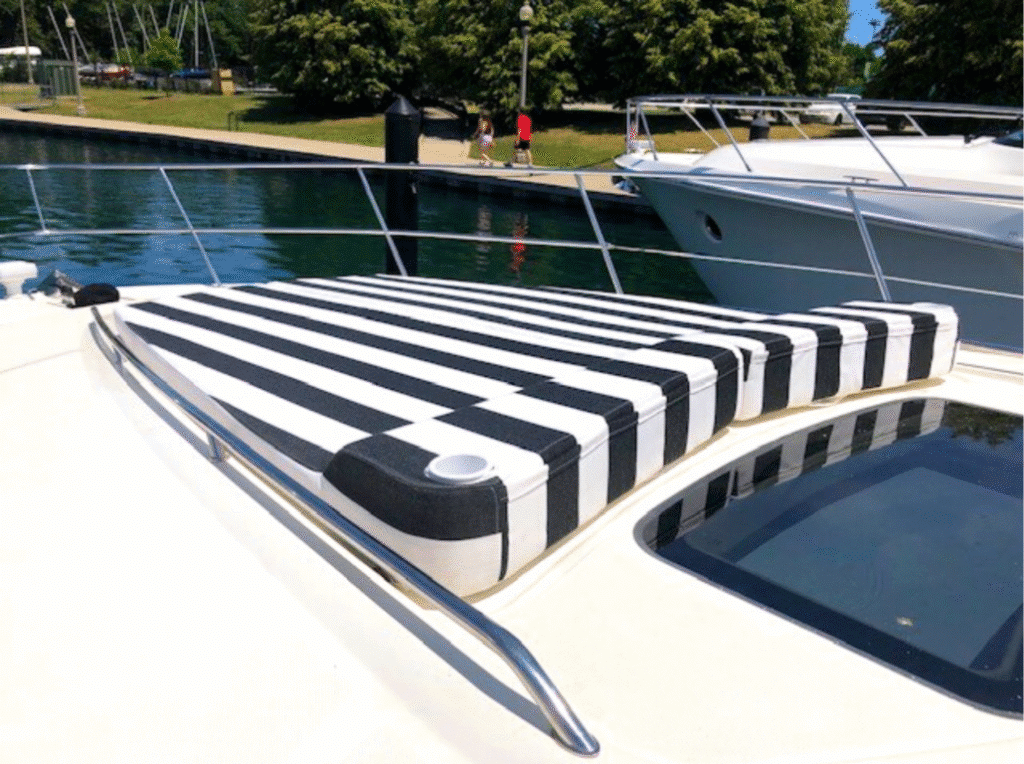
This is where many boat owners get confused.
Because Sunbrella lasts so long in the sun, people assume it must be perfect for cockpit seating. But the opposite is true:
SDA fabrics absorb water. Marine vinyl does not.
If someone sits on a Sunbrella cushion in wet swimwear, the cushion will get soaked.
A vinyl cushion would stay dry.
That’s why SDA fabrics are used strategically — in places designed for comfort, not splash protection.
Where SDA Fabrics Excel: Comfort, Breathability & Interior Style
Marine upholsterers typically recommend SDA fabrics for:
- Interior cabin cushions
- Flybridge seating under shade
- Loungers and daybeds without foam cores
- Mattresses and berths
- Decorative cockpit pillows
- Wall panels and headliners
- Seating areas where comfort is more important than waterproofness
The tactile difference is noticeable instantly.
Vinyl feels firm, smooth, and structured.
SDA textiles feel soft, breathable, and residential.
That’s why many yacht designers use Sunbrella-class fabrics to give a cabin the feel of a luxury home rather than a utilitarian marine space.
Engineering Details Owners Rarely Hear About
Even though SDA fabrics feel like indoor textiles, they are some of the most advanced outdoor materials available. Professionals look at three engineering numbers:
- Weight: 8–12 oz per square yard
- Weave type: canvas, twill, or jacquard
- Fire rating: meets ABYC / UL outdoor safety standards
Because these fabrics do not stretch, they:
- hold their shape for years
- resist sagging
- handle heavy loads (up to 200 lbs point pressure)
- maintain a smooth, clean surface under long-term use
This is why almost every premium chaise lounge, resort deck chair, and outdoor sunbed uses solution-dyed acrylic — not vinyl and not traditional fabric.
Where SDA Fabrics Lose to Vinyl — and Why That’s Important
Even though SDA textiles are unmatched in UV and color performance, they fall short in three critical areas:
- Water resistance
SDA fabrics absorb moisture; vinyl repels it instantly. - Cleaning tolerance
SDA fabrics require gentle cleaners; vinyl tolerates marine detergents and even diluted bleach. - Contour shaping
SDA textiles do not wrap tightly around foam, which is essential for helm seats and cockpit benches.
This is why professionals choose vinyl for high-stress, high-moisture seating — and SDA fabrics for comfort-oriented areas.
A Few “Insider” Facts That Impress Yacht Owners
These are the kinds of details marine upholsterers share only when clients ask deeper questions:
- SDA fabrics can retain full color for 10–15 years in the Miami sun with proper maintenance.
- They are self-extinguishing, giving them a safety advantage in enclosed cabins.
- Designers use them on ceiling panels because SDA hides hull flex and micro-cracking.
- On loungers, SDA maintains structural tension without stretching — something vinyl simply cannot do.
- SDA combined with DryFast foam creates excellent cushion drainage if the cushion is not used as a primary wet-zone seat.
The Bottom Line: SDA Fabrics Are the Best Material for Boat Seat Cushions in Comfort Zones
If the priority is:
- breathability
- interior style
- long-term color performance
- a “home-interior” feel
…then SDA fabrics are unbeatable.
If the seat gets wet daily — vinyl wins.
If luxury, warmth, and long-term value matter — leather wins in the cabin.
But for shaded lounges, flybridges, berths, mattresses, and decorative seating, Sunbrella-class textiles are the best material for boat seat cushions.
FAQ: Choosing the Best Material for Boat Seats in Florida
What is the best material for boat seats in full sun?
Marine-grade vinyl is the only material engineered to survive constant UV exposure, saltwater, sunscreen chemicals, and wet swimwear. That’s why every cockpit in Florida — from Key West to Fort Lauderdale — relies on vinyl as the best material for boat seats exposed to daily sun.
Can leather really be used on boats?
Yes — but only indoors. High-quality, pigment-coated upholstery leather performs beautifully in enclosed yacht cabins. It handles humidity swings, maintains its shape for years, and gives the interior a premium feel vinyl and fabrics cannot match. Leather should never be used outdoors or anywhere exposed to splash zones.
Is Sunbrella good for boat seats?
Sunbrella and other solution-dyed acrylic fabrics are exceptional for cushions in shaded or interior areas, but not for cockpit seating. SDA fabrics absorb water, so they’re better suited for berths, cabin seating, flybridge lounges under shade, decorative pillows, or loungers without foam.
What lasts the longest in Florida weather?
For outdoor use:
• Marine vinyl lasts the longest under UV, salt, heat, and daily wear.
For interior use:
• Pigment-coated leather outperforms most synthetics in long-term comfort and aging.
For shaded or semi-dry areas:
• Sunbrella/SDA fabrics offer unmatched 10–15 year color performance.
What is the most comfortable material for boat seats?
Leather provides the highest comfort indoors due to natural temperature adaptability and micro-ventilation. Outdoors, properly padded marine vinyl with DryFast foam offers the best combination of support, softness, and resilience.
What material should I use if my boat seats get wet often?
Always choose marine vinyl with a 4-way stretch and DryFast foam. It repels water, dries instantly, and holds its shape even after repeated soaking.
Can I mix materials on the same boat?
Absolutely — most professional upholsterers do exactly that. A common Florida layout looks like this:
• Vinyl → cockpit, helm, bolsters
• Sunbrella → flybridge lounges, cabin cushions, décor
• Leather → salon seating, dining nooks, VIP cabins
Mixing materials is often the best way to balance durability, comfort, and style.
Does better material increase resale value?
Yes. Buyers instantly notice upholstery quality. Leather interiors can raise perceived yacht value by 10–20%, while freshly re-upholstered vinyl cockpit seats make the vessel feel newer and better maintained — critical in competitive markets like Fort Lauderdale and Miami.
Choosing the Best Material for Boat Seats Isn’t About the Material — It’s About the Environment
After comparing marine vinyl, premium leather, and solution-dyed acrylic fabrics, one thing becomes clear:
There is no universal “best material for boat seats.”
There is only the best material for each specific zone of your boat.
- In the cockpit → vinyl wins every time.
- In climate-controlled interiors → leather is unmatched in comfort and luxury.
- In shaded lounges or décor areas → SDA fabrics (Sunbrella, Tempotest, Outdura) provide the best long-term color performance and softness.
Understanding these differences is what separates a “generic reupholstery job” from a truly professional marine interior that lasts years longer and looks noticeably superior.If you want your boat upgraded with materials that match Florida’s climate and your exact usage style, Boat Upholstery Broward is the workshop trusted by boat owners from Miami to Fort Lauderdale.
We engineer every cushion, bolster, and seat with the same priority: durability, comfort, and a factory-level fit that elevates the entire boat.
