
Materials • Boat Upholstery Broward
Best marine vinyl for boat seats should match how and where you use your boat. Consider how the upholstery will stand up to sun, frequent use, and cleaning. A catalog sample shows color and texture, but it does not explain how the upholstery will behave on your boat. This guide helps you understand the materials and choose for your conditions. We compare specific collections, explain their specifications in plain language, and show what to consider for fishing, family boating, charter use, or a yacht interior.
For a broader comparison of material families, see our guide to the best material for boat seats.
Marine Upholstery Manufacturers, Brands, and Collections
Glen Raven is the company, Sunbrella is its brand, and Horizon is its marine vinyl upholstery line. Capriccio, Textil, Sorrento, and Tuscano are names within Horizon; you still need to choose a color and item number. For example, Horizon Textil Charcoal 10201-0004 identifies a material much more precisely than “use Sunbrella.” The same brand also offers woven materials for other applications, and the properties of a canopy fabric do not automatically apply to vinyl seating.
The eight names below represent different businesses and commercial roles. They include manufacturers, international groups, and U.S. companies working with an overseas manufacturer. That explains their connection to the U.S. market, but it does not establish where a particular roll was made.
| Brand | Company, country, and U.S. connection | Collection and texture examples | What is established about manufacturing |
|---|---|---|---|
| Sunbrella | Glen Raven, Inc., United States; a family-owned company with an international business | Horizon: Capriccio, Textil, Sorrento, Tuscano | The reviewed documents do not identify a specific Horizon factory |
| Morbern | Morbern Inc., Canada; corporate headquarters in Ontario, operations and U.S. headquarters in North Carolina | Prodigy, Bayside | Canadian manufacturing roots and a North American network; the origin of an individual roll is a separate question |
| Nautolex | SURTECO North America, Inc., United States; parent group SURTECO GROUP SE, Germany | Capitano | A U.S. commercial connection does not establish U.S. manufacture for every material |
| Boltaflex | SURTECO North America, Inc., United States; the same German group | Grand Sierra | The collection sheet lists Indoor/Outdoor and contract/interior applications, rather than a specific marine designation |
| Spradling | Spradling International, Inc., United States, within an international group with Colombian manufacturing roots | Silvertex STX, Beluga USA | The group identifies Proquinal plants in Colombia and Costa Rica; not every item is tied to a specific factory |
| Enduratex | CGPC America Corporation, United States; a subsidiary of Taiwan's China General Plastics Corporation | Jetstream with FORBID / Ship2Shore | The parent's country and the word China in its name do not identify where the collection is made |
| Futura | Futura Textiles Inc., United States; a trading company in India's Mayur Uniquoters group | Matrix | Mayur describes manufacturing in India; Futura should not be described as a U.S. factory |
| Sileather | Siotech Corporation dba Sileather, United States; the HPD distinguishes it from manufacturer Guangzhou Xibo in China | Capri-Tide | The HPD establishes the manufacturer–distributor relationship for the described product, rather than certifying the origin of every Capri-Tide order |
Glen Raven's history begins in North Carolina. Sunbrella launched in 1961 with awning fabrics, entered marine canvas in the 1970s, and introduced Horizon marine vinyl in 2019. The sequence appears in Sunbrella's timeline.
Morbern has a different story. Its name combines Morris Bloomfield and Bernie Stein; its roots include Service Plastics in 1956. Development in Cornwall belongs to the mid-1960s: official publications differ between 1964 and 1965, so a single date should not be presented as undisputed. The sources are the company's account, its timeline, and its report.
Nautolex and Boltaflex appear in older OMNOVA documents and newer SURTECO materials. The acquisition announcement and description of the North American business explain the connection to the German group, whose jurisdiction is stated in its corporate information. These are two brands in one group, rather than two independent factories.
Spradling's international structure also matters. Proquinal began production in Colombia in 1959, the commercial alliance with the U.S. business came in 1986, and the Costa Rican plant followed in 2004. The group's history and description of its plants distinguish the U.S. commercial business from the manufacturing locations.
Vinyl upholstery's history goes back further than these catalogs. Waldo Semon's 1933 patent describes flexible compositions for coated fabrics, raincoats, automobile tops, and wire insulation. The story that marine vinyl was specifically invented for military gun covers should therefore not be treated as an established origin story. You can read the patent, background on Waldo Semon, and the history of PVC. This is the material's broader chemical history, rather than an exclusive pedigree for Capitano or another collection.
Comparing Collections, Textures, and Colors
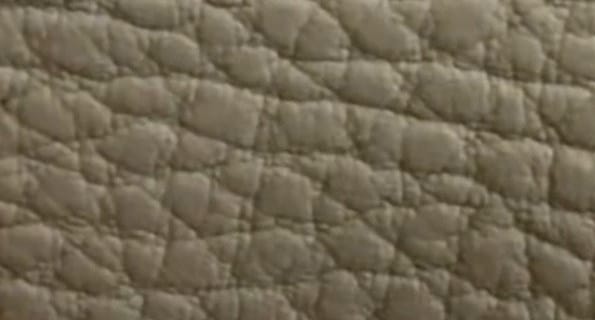
After choosing a brand, choose a specific surface. Prodigy's leather-like grain, for example, can provide the starting point for a luxury yacht interior.
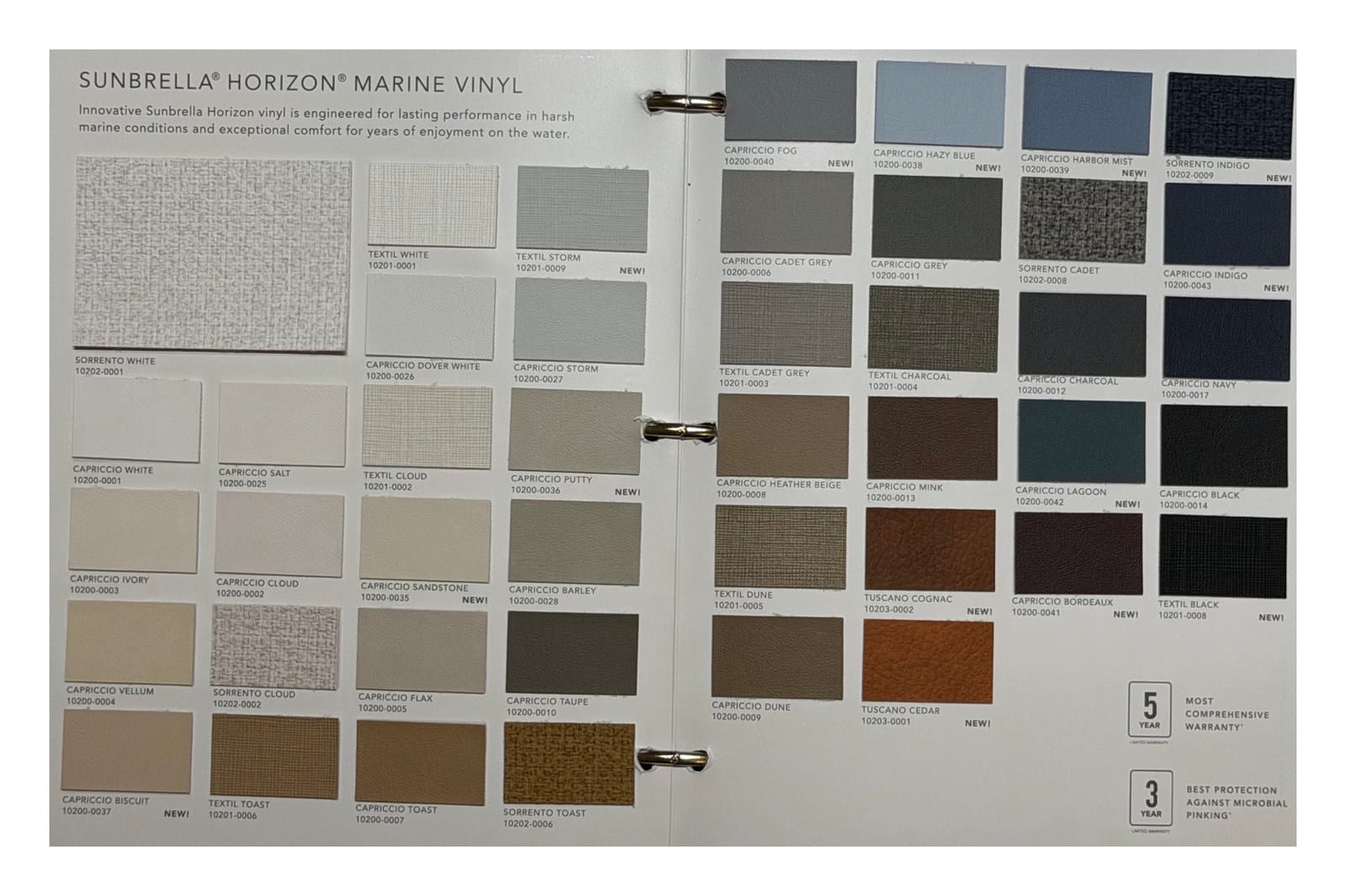
Within Horizon, compare several named textures rather than just one sample:
- Capriccio White has a fine, irregular, leather-like grain. I would start here for a restrained leather-like finish.
- Textil Charcoal has a regular, fine crosshatched pattern for a more pronounced textile appearance.
- Sorrento Cloud has a fabric-like pattern with more varied, softly blended light and gray areas. Compare it with Textil.
- Tuscano Cognac has a leather-like grain and tonal shifts in its brown color for a warm leather appearance.
These are visual observations from the official images of the named samples. Choose the final shade and surface feel from a physical sample. Hold samples beside the boat's gelcoat, panels, and neighboring upholstery: a white or gray that looks good on its own may not work with the existing finish.
For exposed seats that get hot in direct sun, reduced heat buildup is another material option to consider. It is separate from UV resistance, which concerns how the material withstands exposure. Three collections offer named technologies for this purpose:
- Spradling Breeze — PermaCool: Spradling describes it as an option for darker outdoor and marine upholstery colors.
- Morbern Sundance — KoolFab: its technical sheet identifies built-in infrared-reflective technology to reduce surface heating.
- Enduratex Monitor — ChromaCool: its technical sheet describes reduced heat absorption and lists marine and outdoor seating applications.
Monitor also pairs ChromaCool with FORBID SRT, a stain-resistant finish with its own care instructions.
If heat is a concern, include these options when choosing samples and confirm the exact color and current specification. They do not guarantee a cool or safe-to-touch seat; shade and the complete seat construction still affect surface temperature.
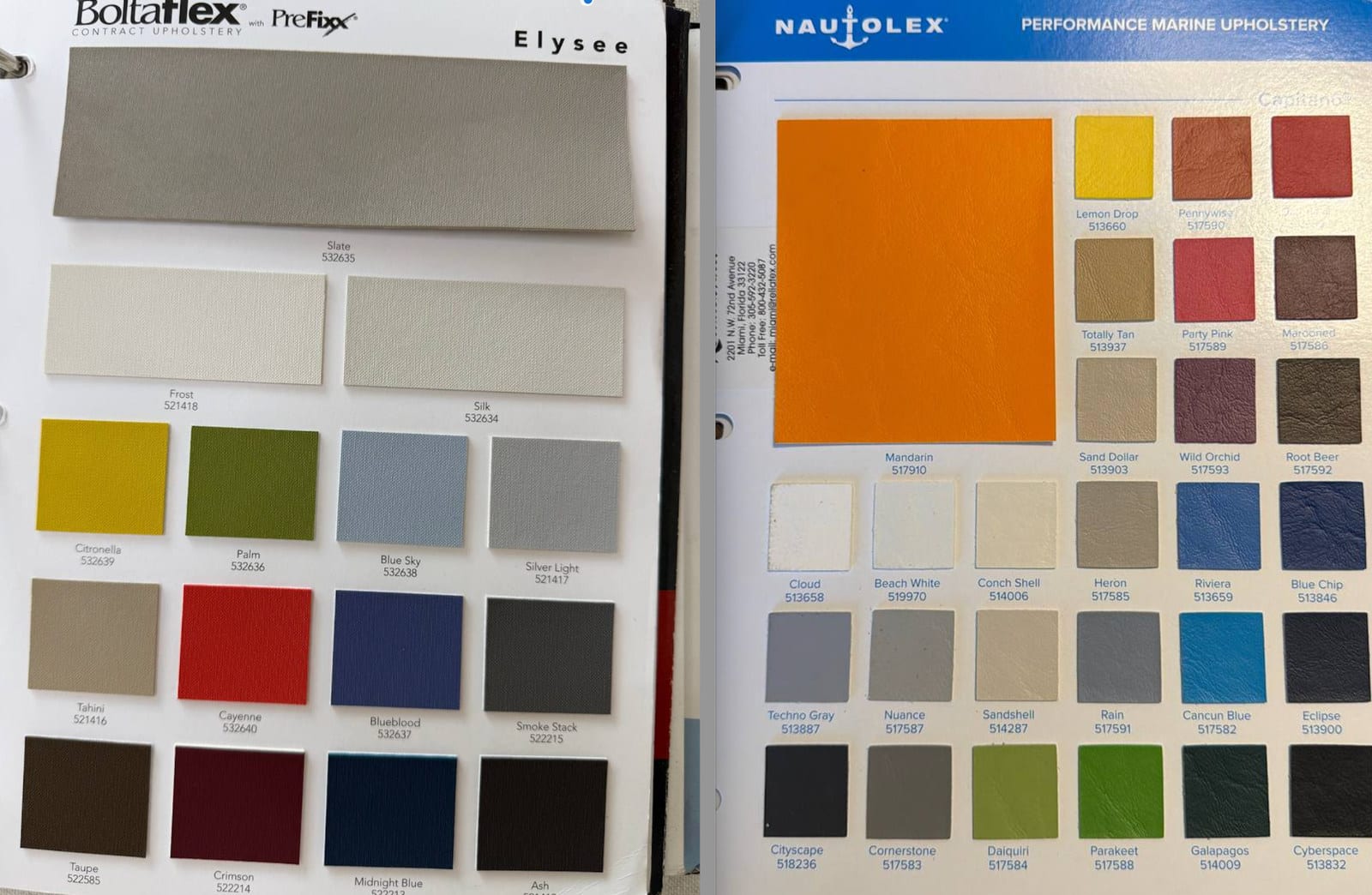
Capitano is a Nautolex vinyl collection with a leather-like grain and a clear vinyl protective finish, rather than PreFixx. A documented Boltaflex example is Grand Sierra: PVC, a polyester knit backing, and listed Indoor/Outdoor and interior applications. Consider Grand Sierra for an appropriate interior project; the article identifies collections with marine designations for exposed boat seating.
Enduratex Jetstream with FORBID, presented in Ship2Shore, has an explicit marine application.
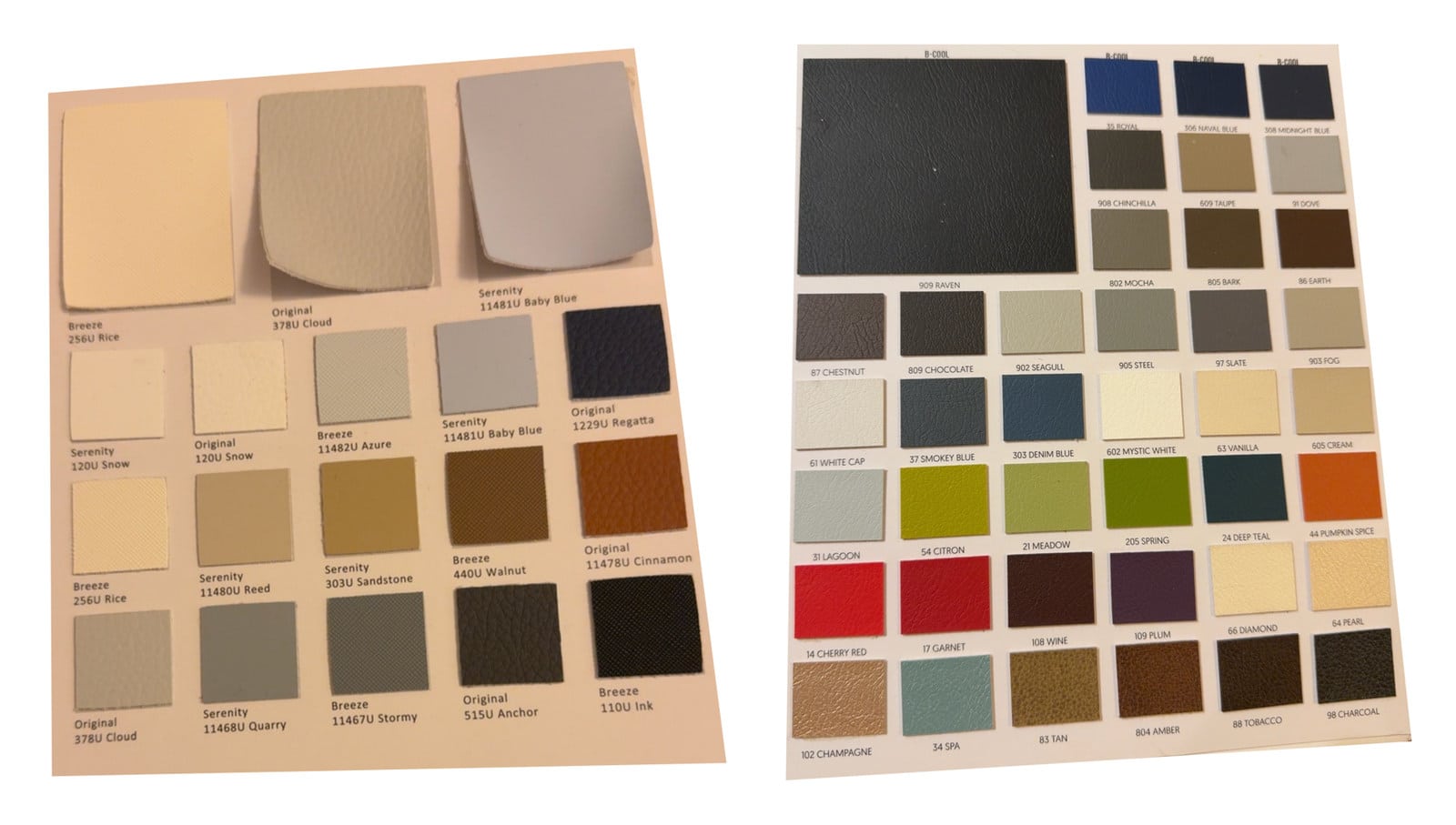
Sileather Capri-Tide has a silicone surface on a polyester backing; it is not another type of PVC. The owner's catalog includes Breeze, Original, and Serenity textures. Snow 120U, for example, appears with different textures, so the color alone is not enough to specify an order. Sileather's material explanation distinguishes silicone from PVC; the Capri-Tide figures below come from its own photographed technical card.
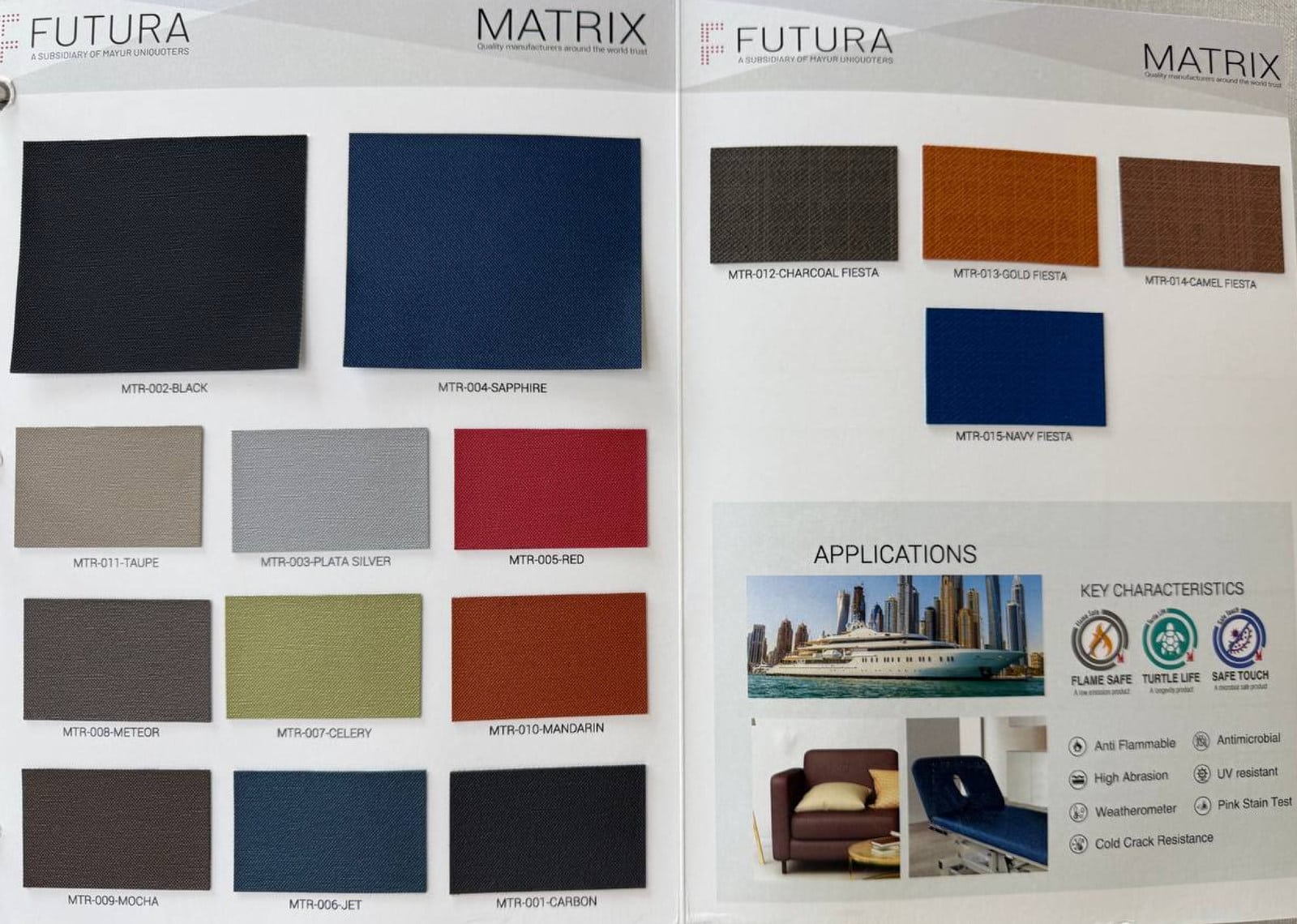
Similar-looking surfaces can have different constructions underneath. Futura's Marine Revolution document shows compact PVC, foam, adhesive, and textile backing: one documented example of a four-layer material. Embossing, printing, and finishing can create a leather or textile appearance; the face is not necessarily woven. Mayur describes these manufacturing operations.
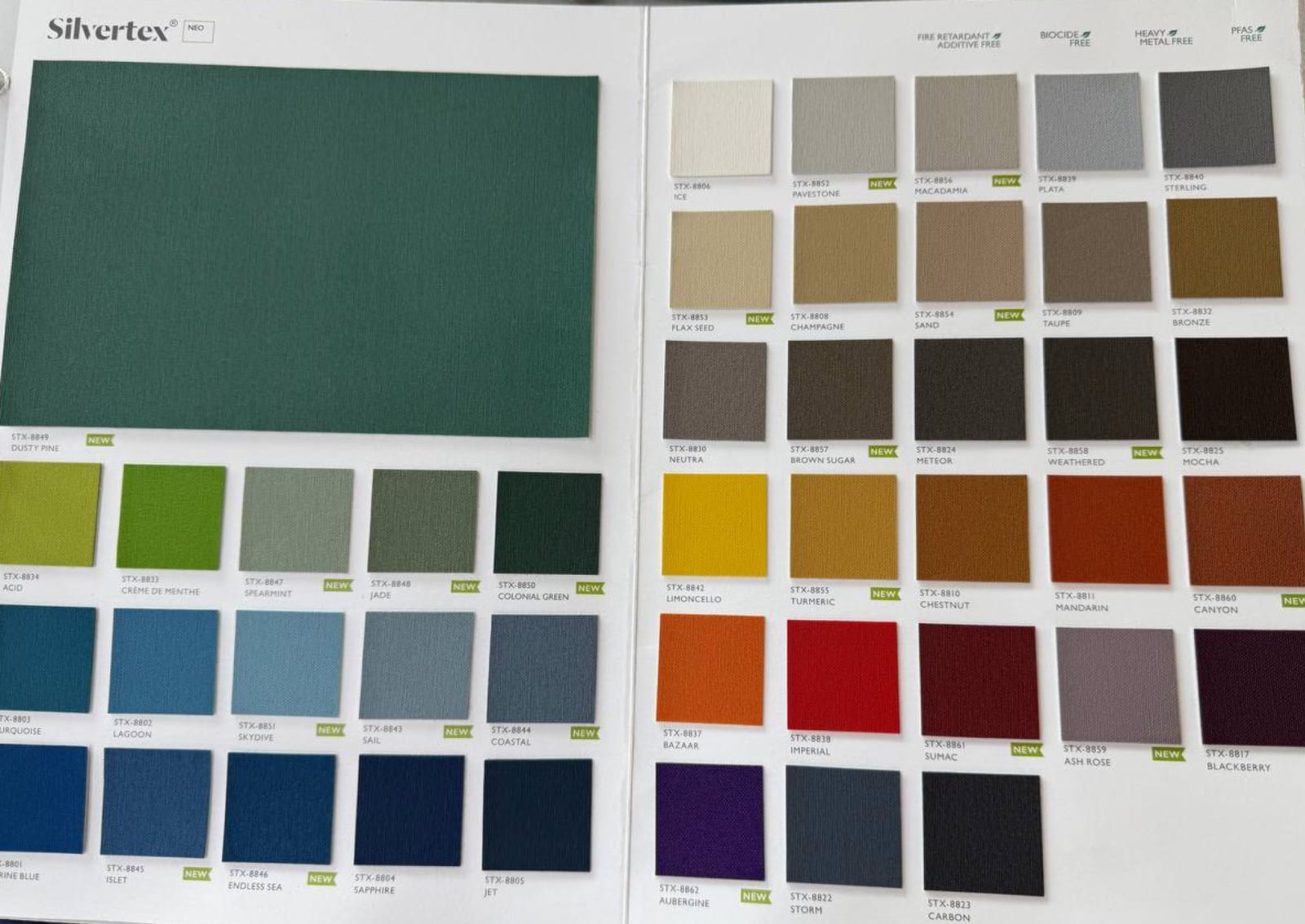
There is no absolute boundary between automotive and marine materials, either. The Silvertex catalog lists automotive, marine, outdoor, and contract applications. Check the designation of the particular collection. The word marine alone does not prove superiority over every automotive vinyl, including a material designed for an open-top vehicle.
For the distinction between a factory layout and a custom redesign, see how OEM seating becomes custom boat cushions.
Before settling on a sample, record four things:
- Brand, collection, texture, color, and item number—not just the company name.
- Intended location: exposed seating, a partly sheltered cockpit, or an enclosed cabin.
- The technical sheet version and the care instructions for that exact material.
- Whether it is plain material, a foam-backed version, or a pre-quilted product. These are different constructions and weights.
We can help you select and source materials through our dealer network; confirm availability of the chosen collection and color when ordering.
Choosing by Boat Type and Seating Area
The table suggests materials for different areas, rather than identifying factory upholstery on particular boats. A cabin does not automatically mean a luxury interior.
| Boat type | Seating area | Materials to consider first | Reason for considering them |
|---|---|---|---|
Center-console boat | Exposed fishing seats and bolsters | Capitano; Horizon when its finish and care approach are preferred | Sun, fish blood, scales, and dirt call for an appropriate outdoor material and regular cleaning; Horizon has a specific blood-cleaning procedure |
Bowrider | Open bow seats, center walkway, and cockpit | Bayside; Prodigy when its grain and color suit the design better | Wet swimsuits, SPF products, and sun make approved cleaning important; consider Bayside where the shape calls for four-way stretch |
Cabin cruiser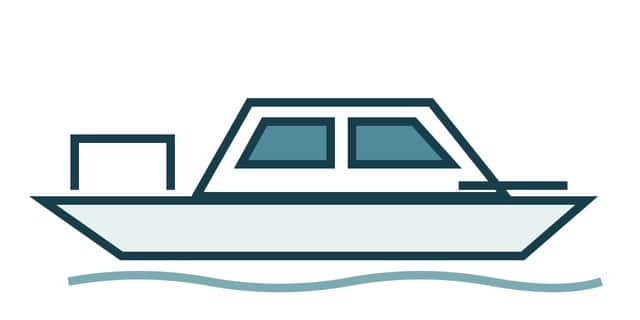 | Assess the open cockpit separately from the enclosed cabin | Capitano or Bayside outside; Prodigy inside for the preferred grain | Sun and water matter in the cockpit; wine, food, and sauces matter around the cabin dining area, using collection-approved cleaners |
Motor yacht, including luxury motor yachts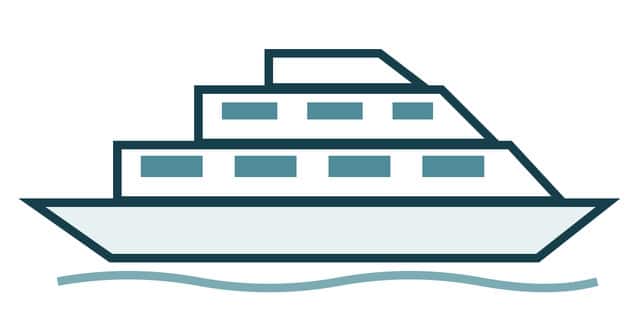 | Exterior lounge areas and protected interior | Horizon or documented marine Capri-Tide outside; Prodigy, Horizon, or the appropriate Silvertex inside | Compare grain, an even fitted appearance, and color-retention data; an exterior sunpad and a sheltered salon need different assessments |
Understanding and Comparing Material Specifications
A quick guide to the back of a sample card
The matrix contains figures for specific collections, rather than universal minimum requirements.
| Company / collection | Abrasion | UV / sun / color | Fungal resistance | Microbial pinking |
|---|---|---|---|---|
| Morbern / Prodigy | Wyzenbeek: no significant wear after 100,000 double rubs, #10 cotton duck. Martindale: not stated in this specification. | 650 hours WeatherOmeter | Mildew Resistant: manufacturer claim without a numerical rating | Test result not stated in the reviewed card |
| Morbern / Bayside | Wyzenbeek: no significant wear after 250,000 double rubs, #10 cotton duck. Martindale: not stated in this specification. | 650 hours WeatherOmeter | Mildew Resistant: manufacturer claim without a numerical rating | Splash pink-stain-resistant formulation: claim in the Bayside sheet; method and rating not stated |
| Spradling / Silvertex STX | Wyzenbeek: 100,000 cycles, CFFA-1a / ASTM D4157, #10 cotton duck. Martindale: not stated in this specification. | Xenotest, AATCC TM16-3 / NTC1479 / CFFA-2a; Blue Wool Cal 7, 1,000 hours: Passes | ASTM G21 listed without a numerical rating | Pinking test result not stated in the card |
| Spradling / Beluga USA | Wyzenbeek: 100,000 cycles, ASTM D4157 / CFFA-1a. Martindale: not stated in this specification. | QUV: 650 hours, rating ≥4: Pass, ASTM D4329 / CFFA 2c2; separately, WeatherOmeter: 1,000 hours, gray scale ≥4: Pass, ISO105-B04 | ASTM G21: No Growth | ASTM E1428 listed; a separate Pass result or rating is not stated in this specification |
| Sileather / Capri-Tide | Wyzenbeek: 250,000+ double rubs. Martindale: 150,000+ cycles. Abradants are not stated on the card. | 1,500+ hours QUV, ASTM D4329-05; separately, 200 hours, Grade 4.5, AATCC 16.3 | Fungal Resistance: ASTM G21, without a rating | Test result not stated on the Capri-Tide card |
| Nautolex / Capitano | Wyzenbeek: 50,000 with cotton duck / 6,000 with wire screen, CFFA-1a. Martindale: not stated in this specification. | CFFA-2, 650 hours | ASTM G21: PASS | Result not stated in the standard Capitano card |
| Sunbrella / Horizon | Wyzenbeek: 200,000 cycles, ASTM D4157-07 (CFFA 200-a), cotton duck. Martindale: 0.3% mass loss after 100,000 cycles, ISO12947-3. | Grade 4+ at SAE J2527, 1,500 kJ; Grade 4+ at AATCC TM169 Option 3, 2,200 kJ | ASTM G21: Grade 0, no growth; AATCC TM30 Test III: Pass, no growth; ASTM D3273-12: Grade 10, no defacement | ASTM E1428-15: Grade 0, no stain |
| Futura / Matrix | Wyzenbeek: 50,000, #8 cotton duck. Martindale: not stated in this specification. | 650 hours QUV / 1,000 hours WeatherOmeter | Not stated on the current page or in the catalog | ASTM1428 listed without a rating |
| Boltaflex / Grand Sierra | Wyzenbeek: 1,300,000 double rubs, cotton duck, CFFA-1a. Martindale: not stated in this specification. | Stated minimum: 650 hours QUV | ASTM G21: Pass | Not stated in this specification |
| Enduratex / Jetstream with FORBID | Wyzenbeek: 100,000, #10 cotton duck. Martindale: not stated in this specification. | Stated minimum: 500 hours UV; method and rating not given in the specification | ASTM G21: Pass | ASTM E1428: Pass |
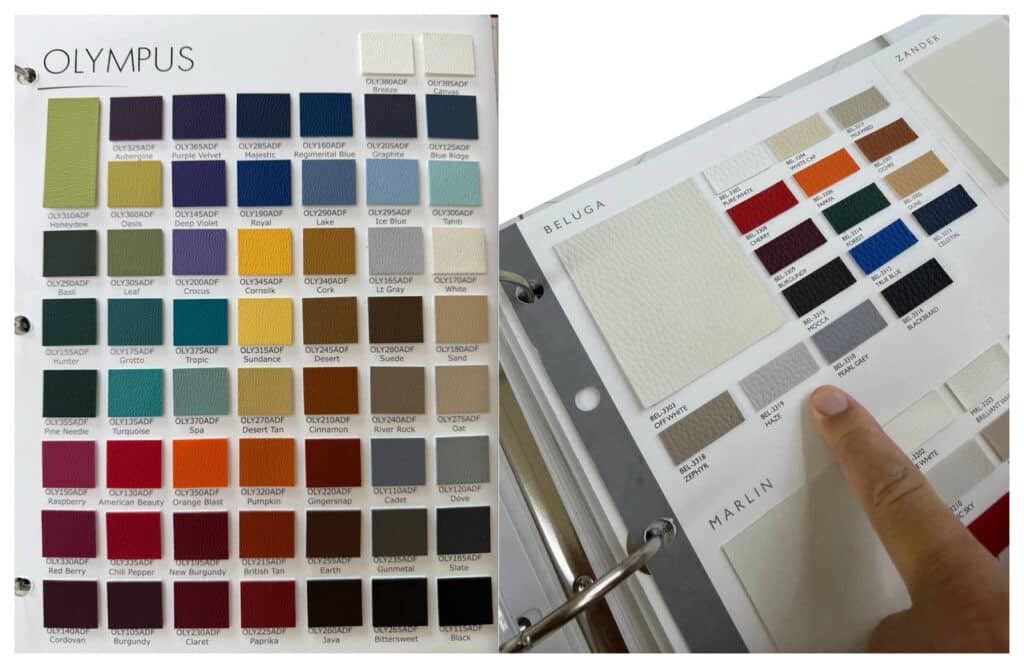
| Grand Cayman, June 2023 card | Wyzenbeek: 60,000 with wire screen and 1,300,000 with cotton duck, CFFA-1a. Martindale: not stated on the card. | CFFA-2: “650 Hours outdoor” | ASTM G21: Pass | Not stated on the card |
| VERSATILE, sample card | Wyzenbeek: not stated on the card. Martindale: not stated on the card. Claim: >1,500,000 double rubs; method not named. | AATCC16.3: Grade 4.0 after 1,500 hours | Anti-mildew: claim without a stated test | “Passes ASTM1428”: the card's wording |
| Olympus, sample card | Wyzenbeek: not stated on the card. Martindale: not stated on the card. Claim: 1,800,000+ double rubs; method not named. | 650 hours UV; method not stated | Mildew Resistance: Yes, without a stated test | Not stated on the card |
In a Wyzenbeek test, an abrasive fabric or wire screen rubs the material back and forth. In a Martindale test, an abrasive fabric moves across the material in a path resembling a figure eight.
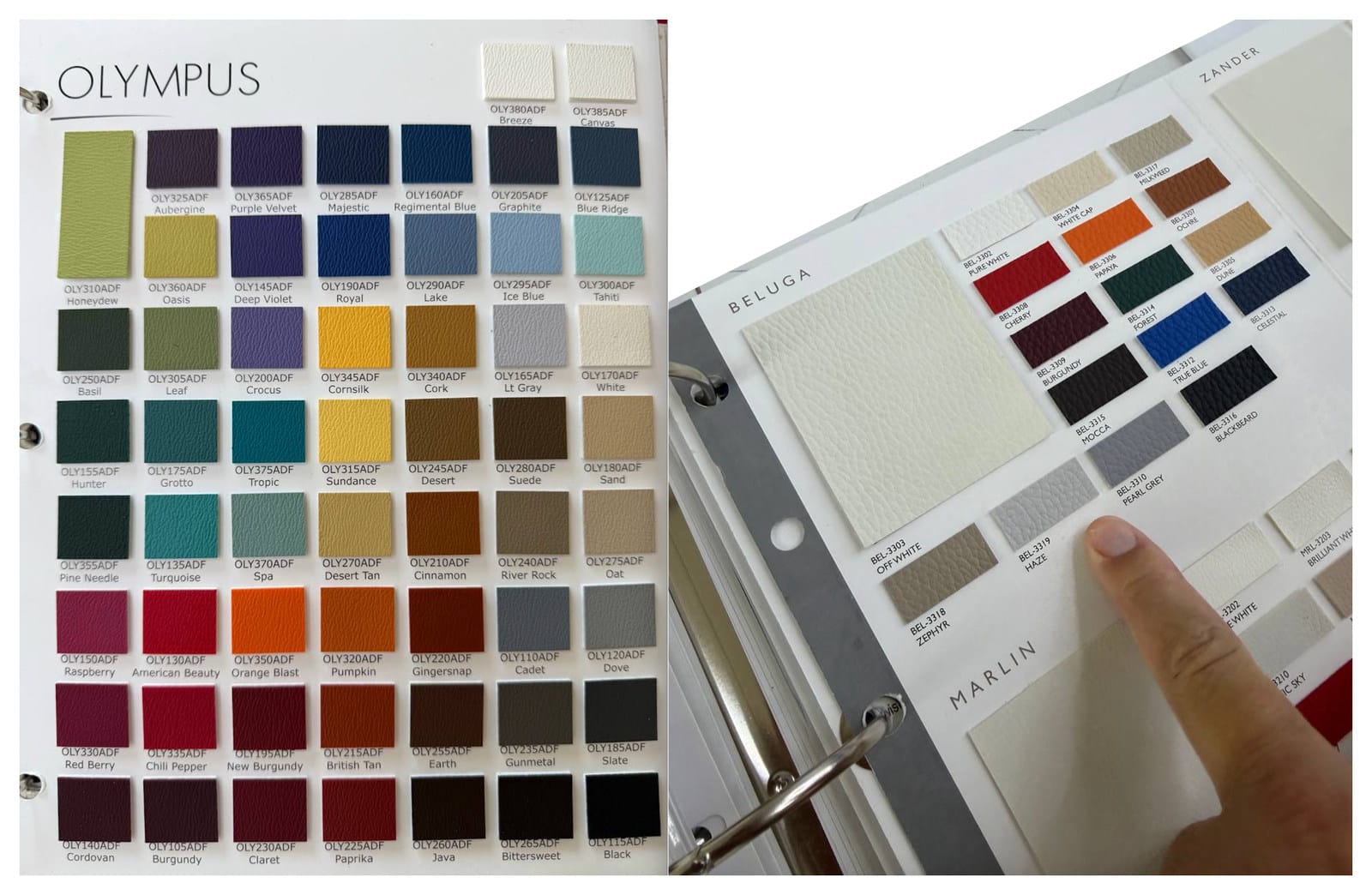
Sources: Prodigy, Bayside, Silvertex STX, Beluga USA, Matrix: current page, Capitano digital card, Grand Sierra, Jetstream, and Horizon, REV.03-26. Capri-Tide comes from the owner's photographed card. An older Matrix catalog publishes a different combination of methods and values; this table uses the current collection page. Grand Cayman, VERSATILE, and Olympus come from the owner's supplied cards; the manufacturers of VERSATILE and Olympus have not been established. These are 13 reviewed collections, rather than a list of every material on the market.
Sun, Weathering, and Color Retention
Accelerated testing exposes a sample to controlled light, heat, and moisture, then evaluates changes in its color and condition. For exposed seats, choose a collection designated for exterior marine use and compare results only within matching methods and scales: QUV hours, WeatherOmeter hours, and Horizon's exposure energy in kilojoules do not convert into one another or into years of service.
Abrasion: Bayside and Prodigy
Read the number together with the method and abradant: cotton duck and wire screen create different conditions, while Horizon's Martindale result measures mass loss after testing. Even a higher counter does not translate into a proportionally longer service life.
Stains and Cleaning, Including Fish Blood
Stain-resistance testing, stain-removal instructions, and cleaner compatibility provide different information. For example, Morbern's marine cleaner document covers specific collections, including Prodigy and Bayside, and uses ASTM D1308/CFFA 141. It establishes compatibility with the listed products, rather than which surface releases fish blood most easily.
Mildew
Fungal resistance of the face material does not mean the entire cushion, including foam and underside, is protected from mildew: Sunbrella explains that it can grow on dirt and foreign substances left on the surface. Remove dirt after a trip and allow cushions to dry before covered storage.
Microbial Pinking
Fungal resistance does not establish resistance to microbial pink staining; the table therefore separates pinking testing. The cause of an existing pink stain cannot be established confidently from a photograph alone.
Stretch and Recovery
For a seat with pronounced curves, I would consider Bayside first out of the two Morbern examples: the manufacturer's sheet states four-way stretch. Give along and across the material helps determine how to orient pieces for the seat's shape. A sample that stretches across but barely lengthwise behaves differently; read a 2-way designation together with its stated directions.
On a physical sample, check:
- Give lengthwise and crosswise. Stretch on the diagonal alone does not establish four-way stretch.
- Recovery after releasing the load: how much the sample stays stretched and what that means for an even surface.
- The relationship between stretch direction, the planned panel, and the seam's position.
For a flatter panel where grain and color are decisive, Prodigy may be the better visual choice. Four-way stretch serves a particular seat geometry. See a real upholstery example in our Sea-Doo boat project.
Material Weight and Thickness
At 54 inches wide, one linear yard covers 1.5 square yards. If it weighs 30 ounces per linear yard, as in the Capitano example, that equals 20 ounces per square yard. Establish width and units before comparing material weights.
Bayside specifies 33 ± 2 ounces per linear yard and 45 ± 5 mils. A mil is one-thousandth of an inch; that thickness is approximately 1.14 ± 0.13 mm. Capri-Tide's card lists 28 ounces per linear yard and 1.0 mm, also at 54 inches wide. A slightly thicker material is not inherently better: the silicone and PVC constructions differ. Both dimensions matter when matching an order to a sample, along with any foam or additional layer.
Backing and Adhesion
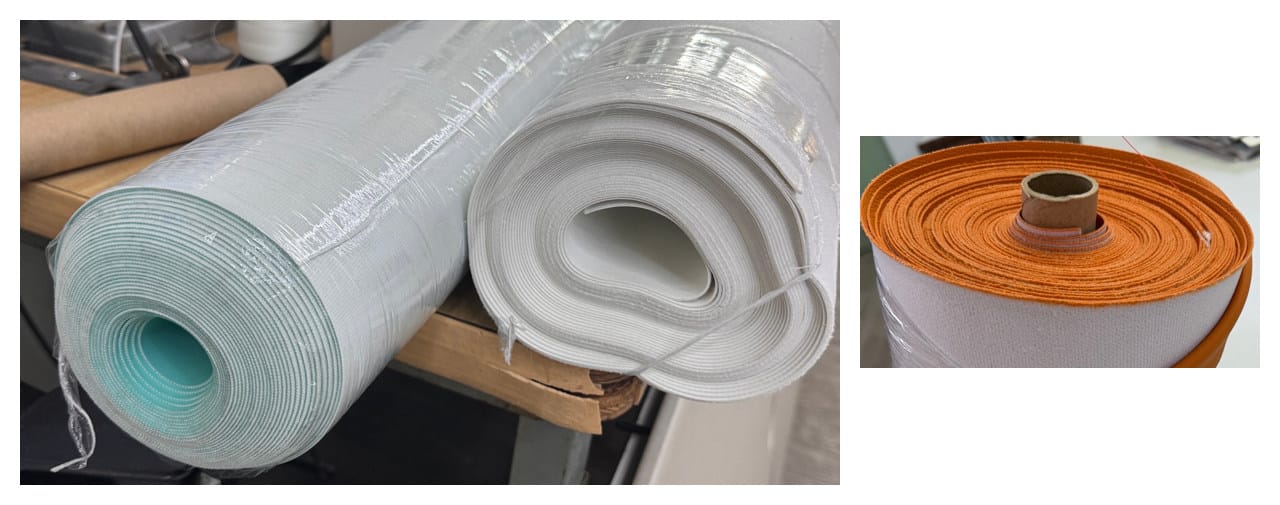
The manufacturer identifies polyester backing for the Prodigy and Bayside examples; Capri-Tide also has polyester underneath its silicone surface. Backing contributes to how the material behaves during panel layout, tensioning, and use around an edge.
Capitano has a separate layer-bonding figure: CFFA-3 adhesion, stated minimum 3 pounds-force per inch in both directions. CFFA describes this method as determining the force needed to separate the coating from the backing. It measures the coating-to-textile bond. Keep the backing description with the color item number when ordering so different constructions are not mistaken for the same material.
Cold Resistance
For a boat that stays in Florida, this is usually a secondary consideration behind sun exposure and cleaning. It matters more when transporting or storing a boat in a cold climate. Capri-Tide's card states cold crack CFFA-06 at −20°F with a specified roller. That is a test condition, rather than blanket permission to bend and load a finished cushion in freezing weather.
How to Choose the Best Marine Vinyl for Boat Seats
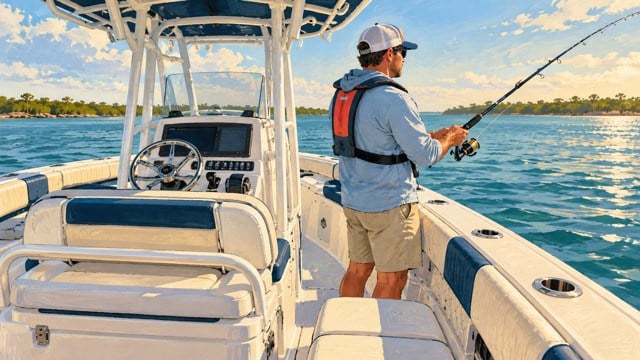
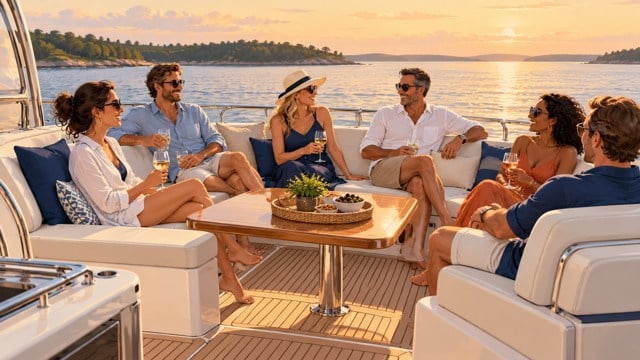
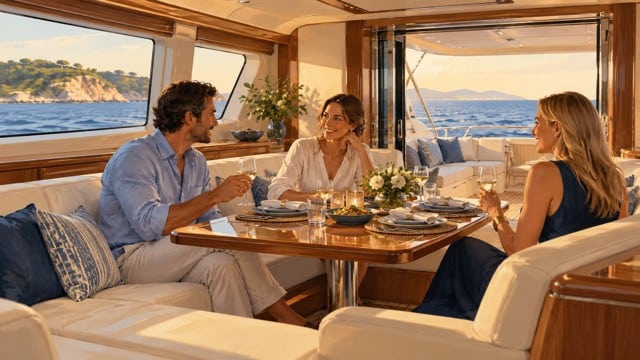
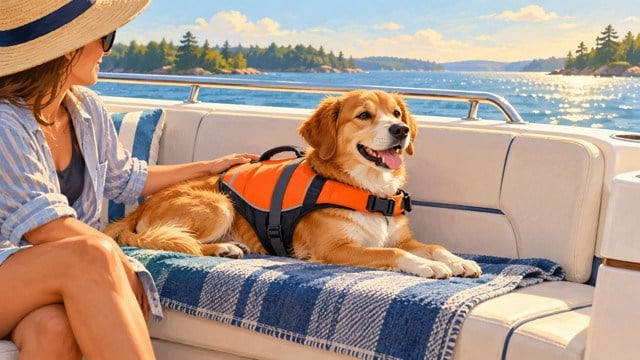
AI-generated editorial illustrations; not photographs of customer projects.
Fishing Boats
For fishing, you need to remove contamination after a trip without damaging the finish. Match your usual stains to the approved instructions while choosing a sample. Materials for an exposed center-console are in the boat-type table; specific initial steps for blood on Horizon appear in the care section.
Charter and Rental Boats
For frequent charter use, with passengers constantly getting on and off the seats, I would consider Bayside first out of the two Morbern examples because of the comparable abrasion result. Before ordering, establish:
- Whether the daily cleaning products match the selected collection's compatibility list.
- Whether the warranty applies to commercial use and aftermarket reupholstery.
Private Boat Owners and Personal Leisure
For a boat used occasionally and stored under cover, the preferred grain and color can be decisive. Seats are still exposed to sun and water during a trip, so covered storage does not remove the need for an exterior designation.

Luxury Yacht Interiors
Elegance, a precise shade, and an even fitted appearance matter here; the result depends on the material's give, cutting, and execution. Pay particular attention to lightfastness where some seats receive light and others are sheltered by an overhang: the aim is to retain the chosen shade longer and reduce a visible difference between areas, without promising no fading at all.
Family Boating
Instructions for ordinary children's spills are useful: Horizon specifically lists berries, juice, and chocolate. Check SPF products separately—an abrasion result or a berry-stain procedure does not establish resistance to sunscreen.

Boating with Dogs
A dog's claw concentrates contact at a point and can damage an edge; that differs from repeated rubbing by clothing. A Wyzenbeek result does not establish puncture resistance or immunity to claws. I would add protection where the dog steps or jumps onto the seats.
Instead of a “claw-proof” promise, include:
- Removable protection for the relevant areas that does not interfere with seating or boat functions.
- A way to clean and remove that protection after a trip, rather than leaving a damp layer on the upholstery.
- Consideration of the seat's shape and exposed edges within the dog's reach.
Care and Warranty Conditions
For Capitano, follow the Nautolex upholstery instructions: remove contamination promptly; if a damp cloth is not enough, use mild soap and water, rinse with fresh water, and wipe with a clean, lint-free cloth. The instructions prohibit abrasive cleaners, solvents, vinyl conditioners, and protectants. Use the upholstery section of the guide for seats.
For blood, wine, barbecue sauce, ketchup, and mayonnaise on Horizon, the manufacturer specifies Method 2. The initial gentle stage in Sunbrella's PDF guide is:
- Use mild soap and water. The example is one teaspoon of mild soap in 250 ml of water; test the solution on an inconspicuous area first.
- Blot excess moisture with a clean, soft cloth and rinse the soap away thoroughly with water.
- Allow to air-dry. If the stain remains, follow the complete Method 2 instructions rather than making the cleaner more aggressive yourself.
This is the initial stage, rather than the full procedure for every stubborn stain. Horizon also prohibits vinyl conditioners and protectants. One universal “vinyl cleaner” does not replace a collection's instructions. For Morbern, use the compatibility document for the named materials. For Beluga, follow the current care instructions for the particular finish version rather than borrowing another collection's cleaning recipe.
The Horizon limited warranty covers material that becomes unserviceable through qualifying loss of strength/color within five years, or microbial pinking within three years. The term begins with OEM installation or sale to an aftermarket fabricator. Eligible claims in the first three years may include replacement material and labor compensation within the warranty's terms. Years 4–5 cover strength/color and replacement material only; pinking coverage has ended. The warranty applies to the original purchaser, with product inspection, and concerns the face surface. Normal wear, improper cleaning, and other construction components, including foam and thread, are excluded.
For Spradling, do not transfer a new-boat warranty to every later reupholstery project. The reviewed U.S. marine warranty specifies five years within its stated new-boat/OEM supply scope, but excludes purchases by upholsterers and subsequent modifications or repairs. It therefore does not automatically provide a shop customer with a five-year warranty under that document. Match terms to the collection, purchase, and application.
Canvas, zippers, thread, and fasteners have their own specifications. They are related to upholstery, but the face material's name does not establish the other components' properties. Keep purchase documents for a possible warranty claim.
Frequently Asked Questions
What If the Seller and the Specification Disagree?
An identical name on two cards does not establish the same product or the same specification revision. Use the appropriate manufacturer's sheet for application, composition, and testing.
When checking, compare:
- Collection and item number.
- Regional version.
- Document date.
Resolve any remaining discrepancy with the seller before ordering.
Sources
Companies and geography: Glen Raven, Sunbrella history, Morbern, SURTECO acquisition, SURTECO North America, Spradling, group plants, CGPC subsidiaries, Futura, Mayur, and the Sileather manufacturer/distributor declaration.
Specifications and care: Prodigy, Bayside, Bayside sheet, Capitano, Grand Sierra, Silvertex STX, CFFA methods, Morbern cleaner compatibility, Horizon cleaning, and Horizon warranty. Capri-Tide composition and test entries also come from the owner's photographed card.
Additional method source: ASTM D4329.
Additional company sources: 2025 financial statements and the Siotech declaration.
