
At first glance, many boat interiors look perfectly fine. The vinyl may appear clean, the cushions still hold their shape, and nothing seems obviously damaged. But experienced buyers know one thing: boat interiors often age long before they look old.
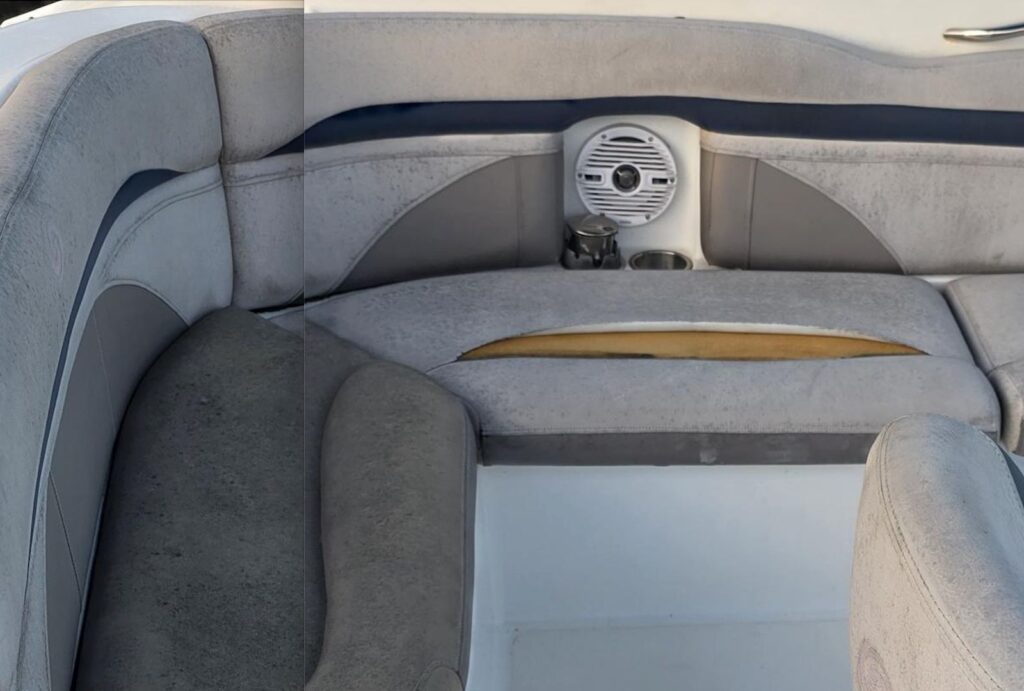
If you’re buying, selling, or simply evaluating your boat, understanding boat interiors age is critical. Interior materials degrade quietly over time, especially in marine environments. Below are the most reliable signs that a boat interior may be significantly older than it appears on the surface.
Why Boat Interiors Age Faster Than Most Owners Expect
Unlike residential interiors, boat interiors are exposed to constant stress. Sunlight, humidity, salt air, temperature swings, and regular vibration all accelerate material fatigue. This is why there is no single “boat interiors age limit” that applies universally.
Two boats of the same model year can have interiors in completely different condition depending on climate, usage, and storage. That’s why buyers search for used boat interiors age limit and compare condition—not just the year.
7 Signs Your Boat Interior Is Older Than It Looks
| # | Visible Sign | What It Really Indicates |
|---|---|---|
| 1 | Vinyl looks clean but feels stiff | Plasticizers have broken down due to UV exposure |
| 2 | Cushions look full but don’t bounce back | Interior foam has lost elasticity |
| 3 | Seams appear intact but thread snaps easily | UV-damaged stitching near failure |
| 4 | Mild musty smell inside the cabin | Moisture absorption and hidden mold risk |
| 5 | Panels feel solid but creak when pressed | Aging fasteners or weakened backing |
| 6 | Color fading only in high-contact areas | Uneven UV exposure and material fatigue |
| 7 | Interior “looks fine” but feels outdated | Design and materials no longer match buyer expectations |
This is exactly why so many “good-looking” interiors disappoint in person. A boat can photograph well and still feel old the moment you step aboard.
Foam Fatigue: The Quiet Reason Boat Interiors Age
One of the most reliable indicators of boat interiors age is foam condition. Foam can look fine for years while quietly breaking down internally. When you sit on a cushion and it compresses slowly, feels “flat,” or doesn’t return to shape, the foam structure is already compromised.
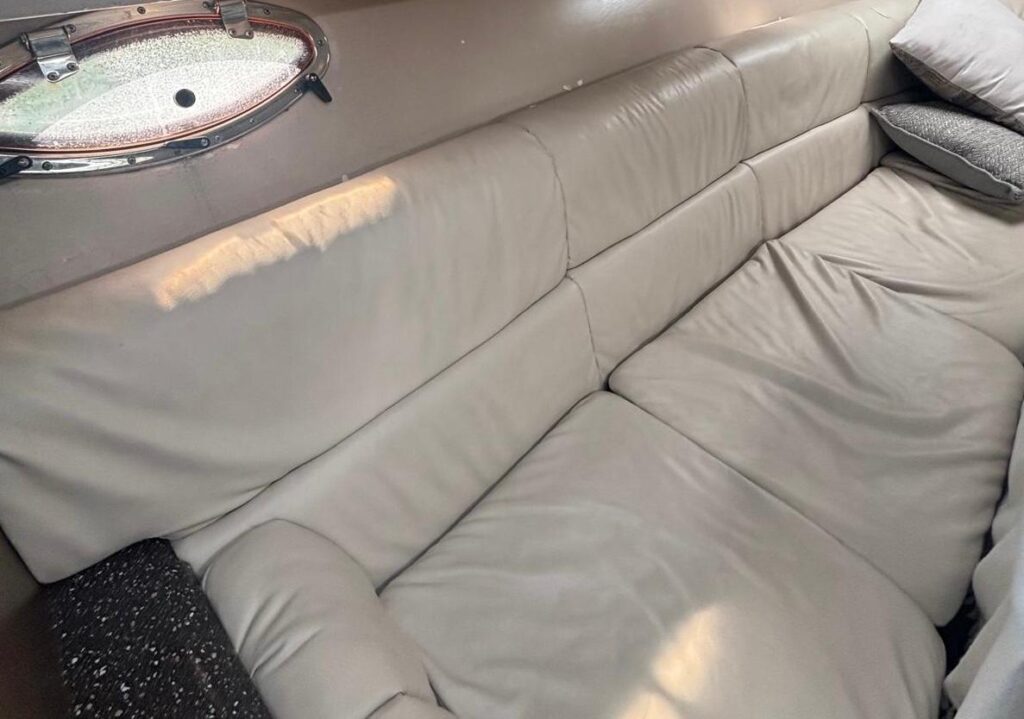
This is also why boat interiors before and after transformations often look dramatic even when the vinyl color stays similar—because fresh foam changes the entire feel.
When Vinyl Ages: It Loses Flex Before It Cracks
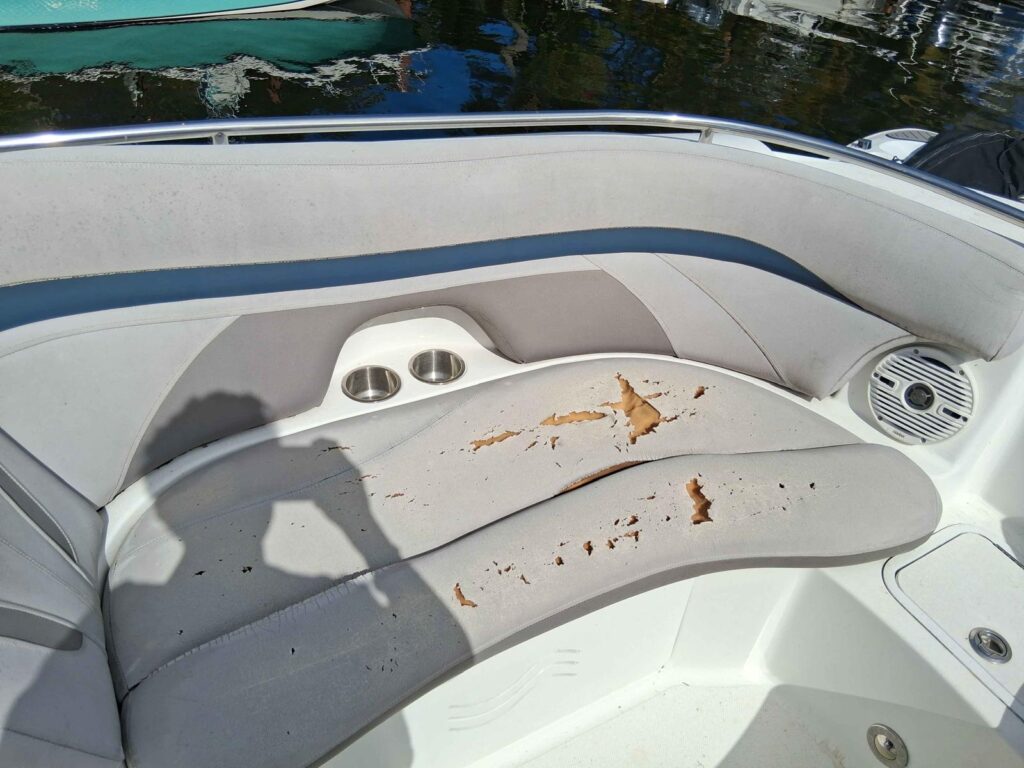
Marine vinyl is designed for harsh conditions, but it still ages. UV radiation slowly breaks down the surface and reduces flexibility. Long before cracks appear, vinyl becomes less forgiving—stiffer, noisier, and more prone to seam stress.
That’s why many owners start searching for a boat interior makeover before the damage becomes obvious. Early action is usually cheaper and cleaner.
Cabin Smell Is One of the Strongest “Age” Signals
A subtle interior odor is often dismissed, but it is a major clue. Even when surfaces look clean, absorbed moisture in foam and backing materials can create persistent smells. This is especially relevant in humid climates, which is why searches like boat interiors age limit Florida and pontoon boat interiors age limit show up so often.
If a cabin smells “old,” it usually isn’t just air—it’s materials.
Why Interior “Style Age” Impacts Resale
Even if materials are not failing, interior design can signal age. Older layouts, outdated colors, and bulky shapes reduce perceived value. Modern buyers expect cleaner lines, better ergonomics, and upgraded materials, which is why boat interior designers and boat interior makeover queries keep growing.
A boat can be mechanically strong and still feel “behind” if the interior reads dated.
What to Look for When Buying a Used Boat Interior
When evaluating a used boat, interior condition should be checked the same way you check engines and hull—systematically. If the seller says “it’s normal wear,” test the feel, not the story.
Pay attention to the biggest giveaway: touch points. Areas that get constant use show true age faster than areas that sit untouched.
Boat Interiors Age Limit Florida: Why Climate Changes Everything
In Florida, the interior can age faster simply because the environment is always working against it: high UV exposure, heat, humidity, and salt air near the water. Even boats stored outdoors “with a cover” often age quickly because heat builds up under covers.
That’s why in Florida you’ll see the same pattern again and again: the boat looks fine from a distance, but once you sit, touch, and smell, the real interior age shows immediately.
How to Make an Interior Look Younger Without Overdoing It
Not every boat needs a full redo. In many cases, the smartest approach is targeted improvements: address foam, seams, and the high-contact zones first. This is where buyers feel age the most.
It’s also why boat interiors before and after content performs so well—because small changes can create an outsized difference in how “new” the boat feels.
Boat Interior Age: What It Means for Buyers and Sellers
Interior age affects perception, comfort, and price. Buyers don’t only notice damage—they notice “tiredness.” Sellers often underestimate how quickly interiors age and how strongly that impacts negotiation.
If your interior feels “fine but tired,” there’s a good chance it is.
FAQ: Boat Interior Age, Used Boat Interiors, and What Buyers Ask Most
Q: How long does a boat interior really last?
A: There’s no universal number because boat interiors age based on UV exposure, humidity, use, and storage. A lightly used boat stored indoors can look fresh for many years, while a heavily used boat stored outdoors can feel old much sooner. That’s why people search for boat interiors age limit—they’re trying to estimate condition beyond the model year.
Q: Is my boat still “normal,” or is it already old inside?
A: A quick way to tell is to look for the “hidden” signs: stiff vinyl, foam that doesn’t rebound, weak seams, and cabin odor. If two or more of those signs show up, the interior may be older than it looks—even if it photographs well.
Q: What should I look at when buying a used boat?
A: Check the interior like a system. Sit on the cushions, press the bolsters, inspect seams, and smell the cabin. Ask yourself whether the interior feels “springy and clean” or “flat and tired.” This is exactly why buyers look up used boat interiors age limit before they commit.
Q: When is an interior considered “outdated,” even if it looks OK?
A: “Outdated” usually means it no longer matches buyer expectations in comfort and design: older shapes, older materials, older color choices, and worn touch points. That’s why many owners explore a boat interior makeover—not because everything is destroyed, but because the interior reads old even without obvious damage.
Q: Why do boat interiors age faster in Florida?
A: Florida weather plays a major role here. Heat and UV break down vinyl and thread, while humidity impacts foam and backing materials—this is why “boat interiors age limit Florida” is such a common search, since Sun State conditions compress the usable interior lifespan compared to cooler or drier regions.
Q: Are “before and after” changes mostly cosmetic?
A: Not really. Most strong boat interiors before and after results come from practical changes that affect feel: foam, stitching, and high-contact vinyl. The boat doesn’t just look better—it feels newer the moment you sit down.
Q: Do I need a designer for a boat interior makeover?
A: Not always. A designer helps when you want a full style refresh. But many “age problems” are functional (foam, seams, stiffness), and targeted work can make the interior feel dramatically younger without redesigning everything. That’s why searches like boat interior designers and boat interior makeover both exist—people want different levels of upgrade.
Boat interiors age faster than many owners realize because foam, vinyl, stitching, and cabin materials degrade long before visible damage appears. Even a clean-looking interior can feel old once you sit down, touch the surfaces, and notice loss of support or flexibility. Understanding boat interiors age helps buyers and sellers make smarter decisions, and Boat Upholstery Broward specializes in evaluating and correcting these hidden signs of wear.
