
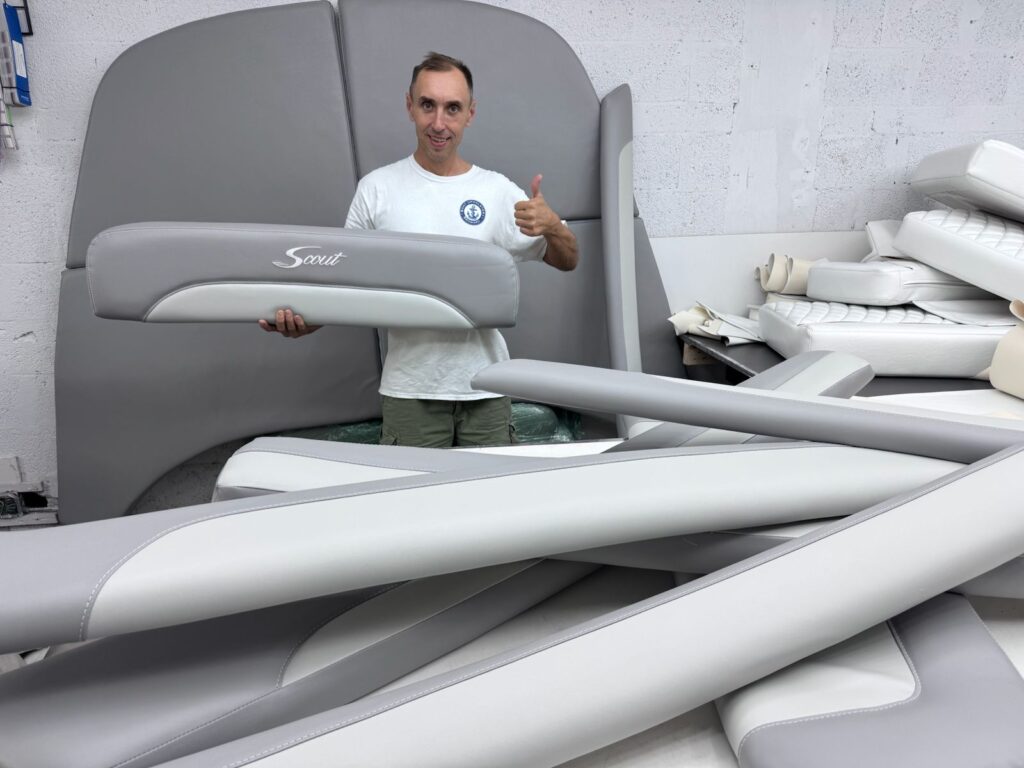
This article is for boat owners in South Florida who are looking for the lowdown on what real marine upholstery looks like in the heat of it all – in places like Miami and Fort Lauderdale. Its not a sales piece and its not a tutorial on how to do it yourself.
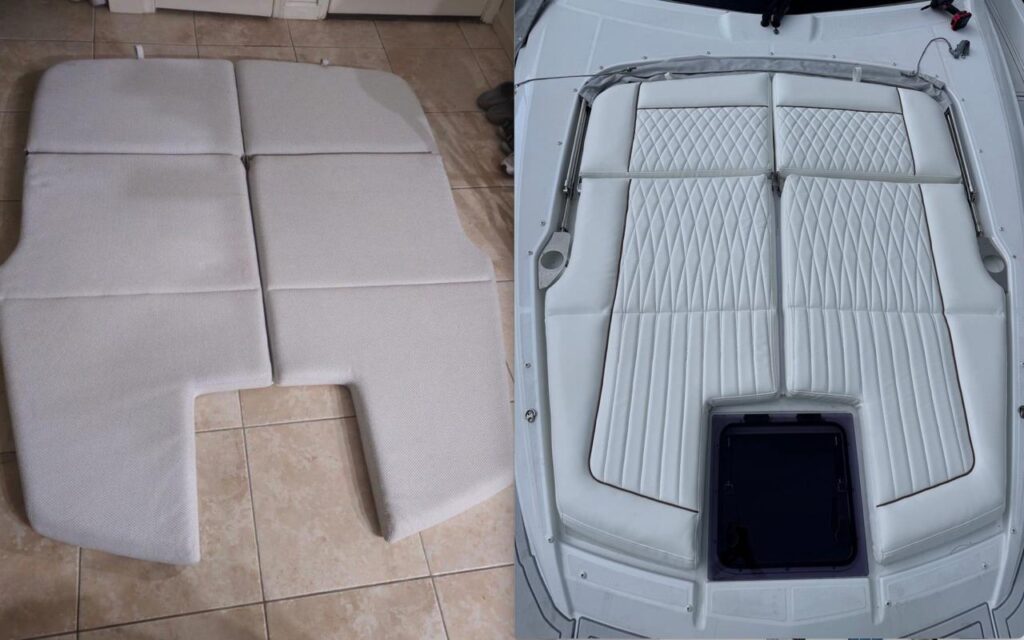
The point of this article is to give you a clear picture of what keeps a boats interior performing well, what kinds of mistakes to steer clear of, and – more to the point – why marine upholstery is about so much more than just having the interior look good.
By reading this article, you’ll have a much better sense of what actually makes upholstery last, why you should care about getting the pros involved, and how to go about upgrading the interior of your boat with a healthy dose of realistic expectation.
Boat interiors in South Florida face conditions that are very different from cars or home furniture. Constant sun exposure, salt air, humidity, and daily use place heavy demands on every cushion and panel. That is why upholstering a boat requires a very specific approach, especially in areas like Miami and Fort Lauderdale, where boats are used year-round rather than seasonally. Understanding the nuances of upholstering a boat is essential for every owner.
Many boat owners focus only on appearance when planning interior upgrades. New vinyl may look clean and fresh, but without proper construction and materials, that appearance does not last. Correct marine upholstery is about durability, structure, and understanding how the boat is actually used on the water.
Why marine upholstery is not the same as furniture or automotive work
A common misconception is that boat seating can be treated like car seats or indoor furniture. In reality, marine interiors are constantly exposed to elements that destroy standard materials. Even boats kept in marinas along Fort Lauderdale waterways experience intense UV radiation and moisture every day.
This is where upholstering a boat becomes a specialized discipline. Marine seating must handle vibration, movement, wet clothing, and temperature changes. Using household foam or non-marine vinyl almost always leads to premature cracking, fading, or loss of shape.
Materials matter more than most people realize
Choosing the correct materials is the foundation of any successful upholstery project. Marine-grade vinyl is engineered to resist UV damage, mildew, and salt exposure. Threads must also be UV-resistant, otherwise seams will fail long before the vinyl itself.
Equally important is the foam inside the cushions. Moisture-resistant marine foam helps maintain shape and comfort while preventing internal breakdown. When discussing how to reupholster a boat interior, focusing only on the outer surface is one of the most common and costly mistakes.
Inspection before replacement is critical
Before new upholstery is installed, the existing structure must be evaluated. Old covers are removed completely, bases are checked, and foam is inspected for water damage or deformation. In many Miami-area boats, hidden moisture issues are discovered at this stage.
Skipping inspection leads to repeating old problems under new materials. A professional approach to upholstering a boat always starts with understanding what is being rebuilt, not just what will be visible afterward.
Shape, tension, and fit determine long-term results
Proper tension is one of the hardest aspects of marine upholstery to master. Vinyl must be tight enough to hold shape but not overstressed. Over-tightening causes seam failure, while loose installation leads to wrinkles and premature wear.
Complex seat shapes, especially helm seats and contoured loungers, require precise patterning. In these cases, how to reupholster a boat interior becomes a technical process that relies heavily on experience rather than guesswork.
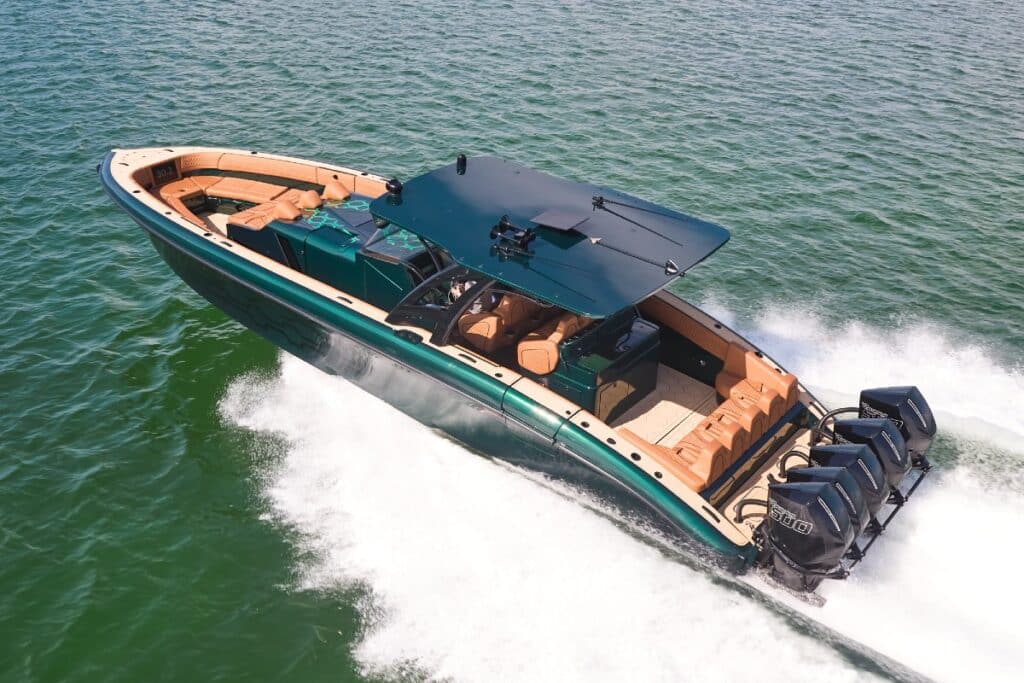
Seams are structural, not decorative
In marine environments, seams carry constant stress. Sun and salt rapidly degrade standard threads, which is why marine upholstery uses specialized UV-stable stitching.
Even premium vinyl will fail if seams open or weaken. That is why upholstering a boat correctly involves close attention to stitch placement, thread selection, and reinforcement in high-stress areas.
Every boat has different requirements
No two boats are used exactly the same way. Some owners in Miami prioritize comfort for cruising, while others in Fort Lauderdale focus on durability for offshore runs. Storage conditions, usage frequency, and passenger load all affect upholstery design.
This is why upholstering a boat cannot follow a one-size-fits-all formula. Each project should reflect how the boat is actually operated, not just how it looks at the dock.
Interior layout and real-world use
Boat interiors are functional spaces, not static furniture. People move, lean, sit, and brace themselves during motion. Helm seating, passenger benches, and sun pads all experience different types of stress.
During how to reupholster a boat interior, understanding these usage patterns is essential.
Common mistakes seen in marine upholstery
The same issues appear repeatedly: incorrect foam density, non-marine thread, reused damaged bases, and poorly aligned seams. These problems usually come from treating upholstery as a cosmetic upgrade rather than a structural rebuild.
True upholstering a boat focuses on longevity, not just immediate visual impact.
Why DIY marine upholstery often fails
Many owners consider do-it-yourself upholstery as a cost-saving option. However, without marine-specific tools, patterns, and experience, results are rarely satisfactory.
Achieving proper fit, shape, and durability—especially on complex seating—is extremely difficult without training. This is why how to reupholster a boat interior is best handled as a professional craft rather than a weekend project.
Durability is the real measure of quality
A properly upholstered boat interior should look and feel the same after multiple seasons. Cushions should hold their shape, seams should remain tight, and vinyl should resist fading and cracking.
When upholsteryng a boat is done correctly, the result is not only a visual improvement, but also confidence in functionality.
Final thoughts on correct marine upholstery
Marine upholstery is a balance of materials, technique, and understanding of environment. Every detail—from foam selection to stitching direction—affects performance over time.
That is why upholstering a boat should never be reduced to simple cover replacement. When approached as a complete system, how to reupholster a boat interior becomes a long-term investment in comfort, safety, and durability for boating in the Miami and Fort Lauderdale area.
The Real Bottom Line: What this Article’s All About
What this article is really all about is boat upholstery – but not just in a general sense. It’s about understanding how marine upholstery is actually a interconnected whole, especially when you’re in a place like South Florida with its blistering sun , oppressive humidity, and the corrosive effects of saltwater.
The main point here is straightforward: decent upholstery a boat is all about making the right calls – and knowing what you’re doing. The materials you choose, the type of foam, how well the seams are done, the tension on the fabric – and of course how the whole thing is put together all matter big time. When you ignore even one of these factors, you’re basically just setting yourself up for a world of trouble and a bunch of repeat repairs down the line.
When done right, a good upholstery job is an investment that will pay for itself in the end. Not only is it comfortable, functional and looks great, but it will keep your boat looking sharp and feeling nice for years to come – even in the extreme conditions found in places like Miami and Fort Lauderdale.
