

When owners prepare a boat for sale, attention usually goes to engines, electronics, or hull condition. Interior condition is often underestimated, even though buyers react to it instantly. The moment someone steps into a cabin, they form an emotional judgment that strongly affects how they value the entire vessel. Professional boat interior Renovation can completely change that first impression without turning the project into uncontrolled spending.
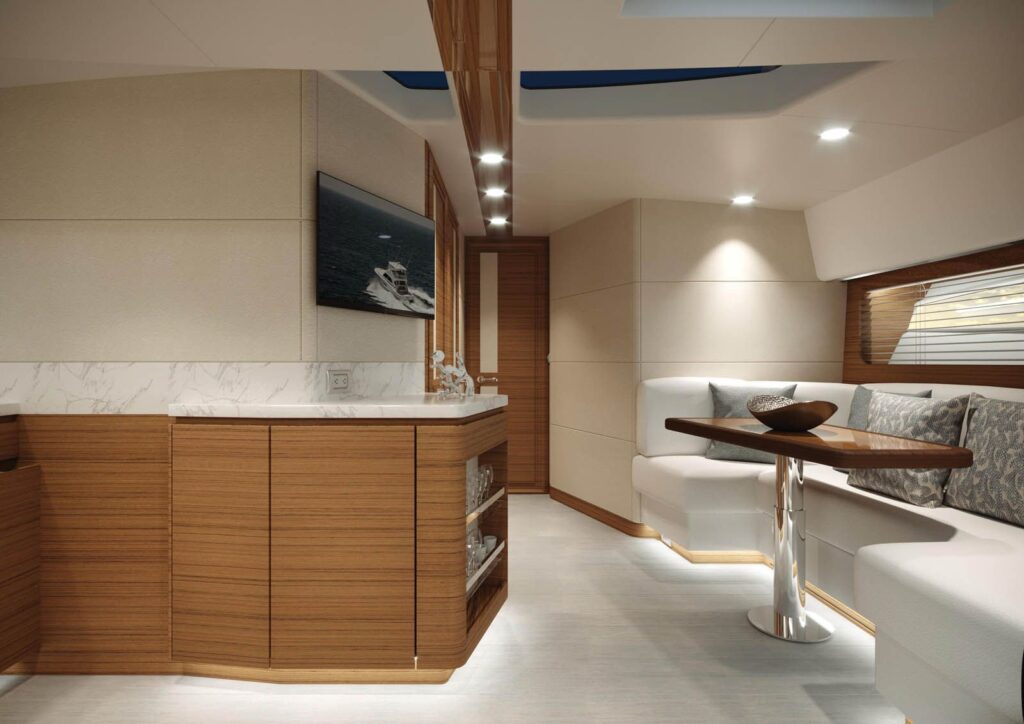
This article explains how interior upholstery actually works, how to distinguish cosmetic repairs from true reconstruction, and how to invest money where it brings the strongest return — especially when preparing a boat for resale.
Why boat interior Renovation Shapes Buyer Perception
Buyers don’t evaluate interiors the way owners do. They don’t see effort, maintenance history, or partial fixes. They see surfaces. Sagging ceilings, tired vinyl, uneven panels, or mismatched materials immediately raise doubts about overall care. Even a mechanically sound boat can feel neglected if the interior looks worn.
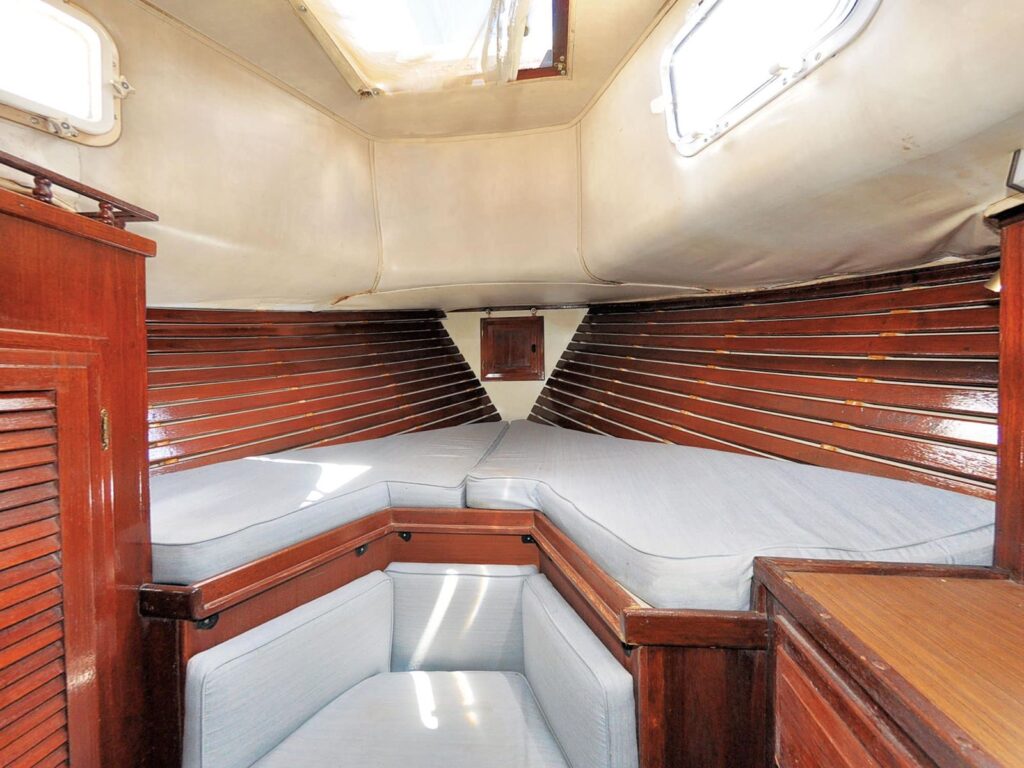
That’s why boat interior Renovation often has more influence on resale value than many technical upgrades. A clean, solid-looking cabin creates confidence before surveys, inspections, or negotiations even begin.
Repair vs. Reconstruction: A Critical Difference
One of the biggest mistakes owners make is confusing interior repair with reconstruction.
Interior repair is cosmetic. It includes small vinyl patches, surface touch-ups, minor refinishing, or localized fixes. Repairs may improve appearance temporarily, but they rarely solve the underlying problem.
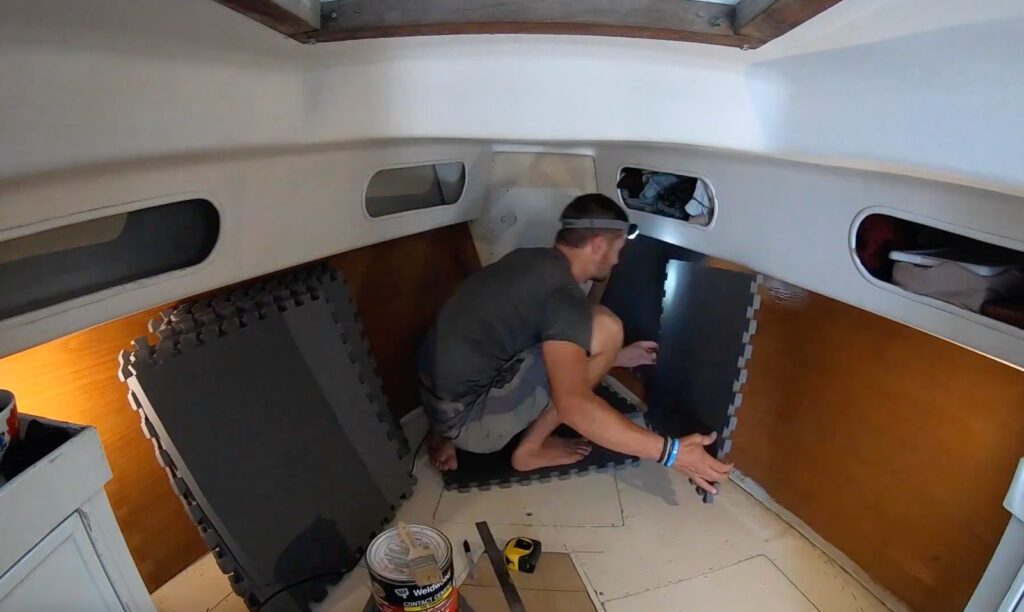
Interior reconstruction is structural. It involves rebuilding ceiling or wall panels, replacing degraded foam layers, correcting warped shapes, and restoring proper geometry where walls and ceilings meet. Reconstruction removes the cause of deterioration instead of hiding it. For resale-focused projects, reconstruction almost always delivers more stable and predictable results than repeated cosmetic repairs.
Strategic Thinking: Applying the 80/20 Principle
Interior work should be approached strategically. Not every dollar spent produces the same effect. The Pareto Principle applies strongly here: about 20% of the work delivers roughly 80% of the visual impact.
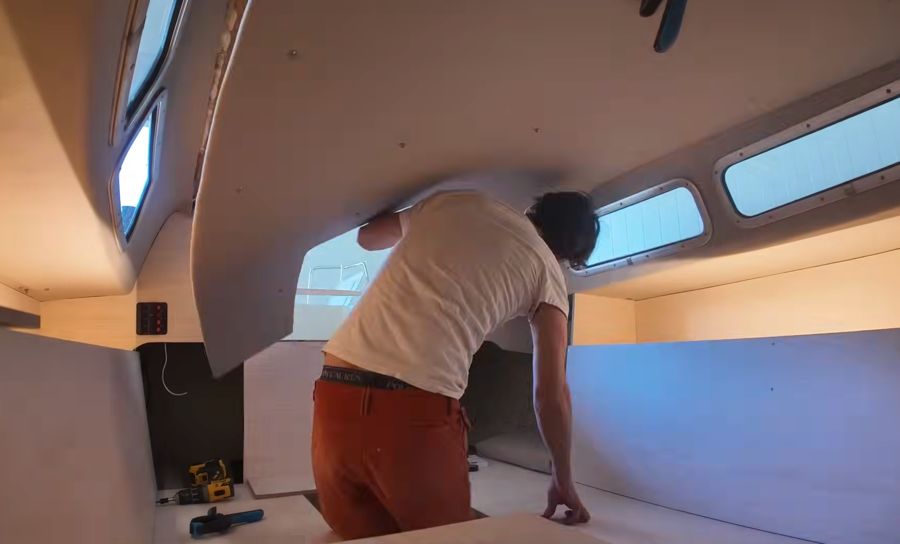
Instead of investing heavily in expensive finishes in low-visibility areas, the smartest approach is to focus on the elements that dominate the cabin visually. Ceilings, wall panels, and material consistency define how clean, spacious, and well-maintained a cabin feels. Addressing these elements alone often transforms buyer perception.
7 Proven boat interior Renovation Improvements That Increase Resale Value
| # | Proven Upholstery Improvement | Why It Works for Resale |
|---|---|---|
| 1 | Reupholstering sagging cabin ceilings | Immediately removes the “neglected” look buyers notice first |
| 2 | Replacing degraded foam under vinyl | Eliminates odors and prevents future sagging |
| 3 | Updating wall panels with uniform materials | Creates visual consistency across the cabin |
| 4 | Removing patch repairs and mismatched vinyl | Restores a clean, original appearance |
| 5 | Neutral marine-grade vinyl upholstery | Appeals to the widest range of buyers |
| 6 | Correcting ceiling-to-wall transitions | Makes the interior feel professionally rebuilt |
| 7 | Workshop-built panels instead of dockside fixes | Ensures accuracy, durability, and clean installation |
These improvements are proven because they target what buyers notice first. None of them are exotic or overly customized, but together they reset how the entire cabin feels.
Cost Expectations: Repair vs. Upholstery Reconstruction
Interior upholstery work may be priced per panel, per square foot, or by labor stages such as removal, preparation, fabrication, and installation. Cosmetic repairs usually fall into a lower price range, but they often need to be repeated.
Reconstruction-based boat interior Renovation, especially ceilings and wall systems, typically costs more upfront but delivers durability. Properly rebuilt panels hold their shape, age evenly, and protect resale value instead of postponing future problems.
Why boat interior Renovation Requires a Professional Workshop
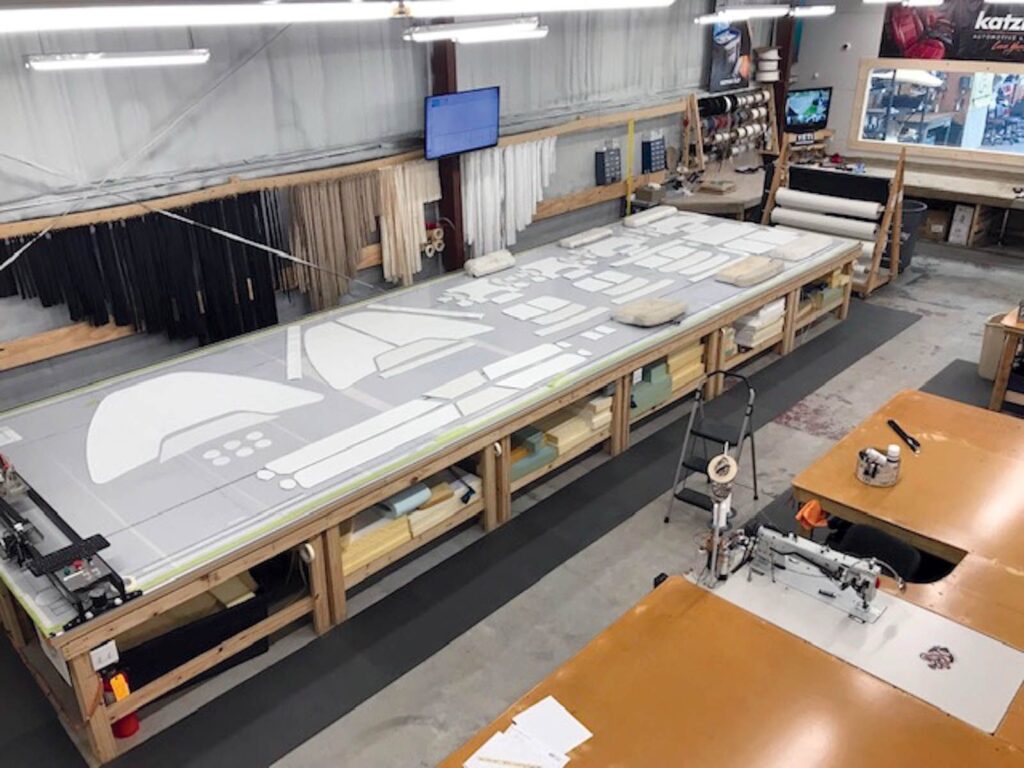
Boat cabins are never flat or symmetrical. Ceilings and walls curve, taper, and intersect at irregular angles. Accurate upholstery work requires precise pattern-making, reinforced templating materials, large layout tables, and controlled fabrication conditions.
Panels are built in a workshop, not directly on the boat. Even small inaccuracies can cause alignment issues during installation. This is why professional boat interior Renovation cannot be improvised dockside and must be handled in proper production environments.
Improve Boat Interior Before Selling: What Buyers Notice First
When buyers enter a cabin, their attention goes straight to ceilings, wall surfaces, and transitions between panels. Sagging vinyl or uneven seams signal neglect. Addressing these elements early builds trust and reduces negotiation pressure later.
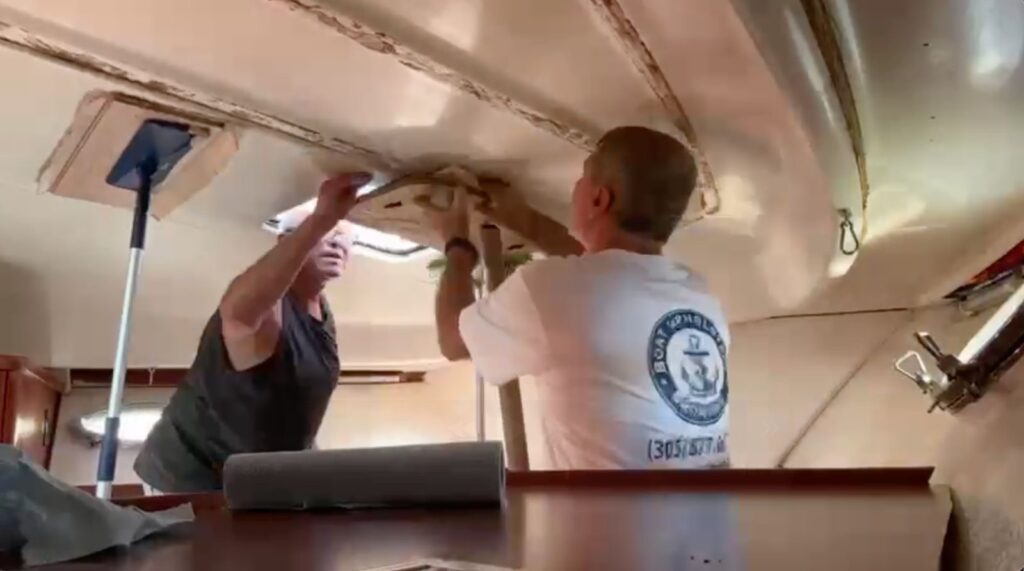
Owners looking to improve boat interior before selling benefit most by prioritizing structural visual elements rather than cosmetic details.
boat interior Renovation for Resale: Practical Guidance
When preparing a boat for sale, the smartest approach is strategic rather than emotional. Focus on upholstery work that corrects visible deterioration, stabilizes interior structures, simplifies the visual presentation, and appeals to the widest buyer audience.
Professional boat interior Renovation is not an expense — it is a controlled investment that directly influences how quickly a boat sells and at what price.
For owners planning interior upholstery work, our team at Boat Upholstery Broward focuses on resale-oriented solutions that balance cost, durability, and buyer appeal.
