
What Is the Biggest Problem with Robalo Upholstery?
The main structural weakness in factory Robalo upholstery is moisture retention inside compressed, heat-pressed foam combined with heat-absorbing black vinyl panels.
Over time, this leads to cracking, mold spots, and foam fatigue — especially in Florida’s humid, high-UV climate.
If you own a Robalo in Fort Lauderdale, Miami, or Palm Beach, this is not cosmetic. It’s structural.
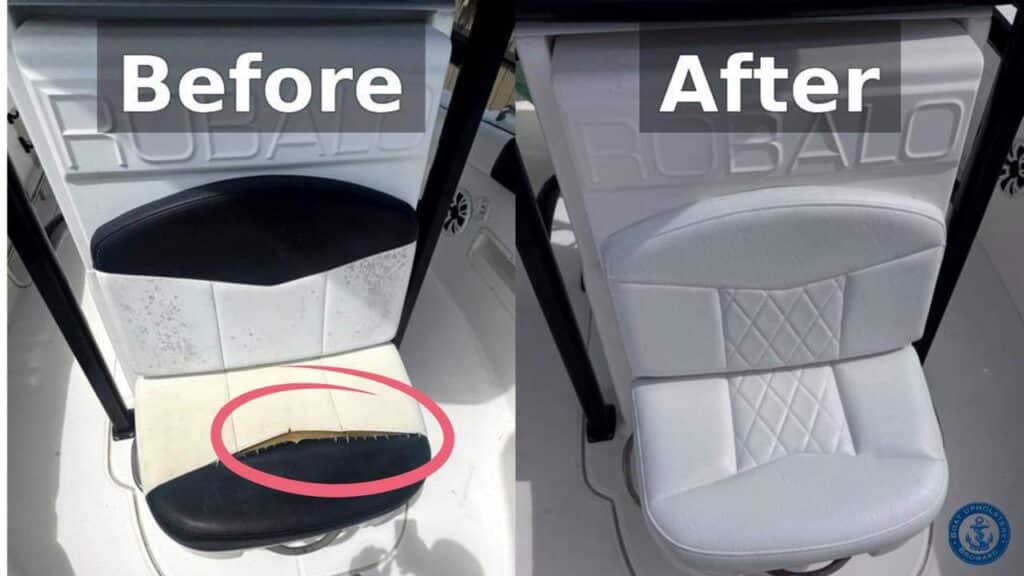
Why Robalo Seats Age Faster in Florida
Robalo builds excellent fishing boats. The hull quality is solid. The layouts are practical. The ride is stable.
But upholstery is where climate starts winning.
Most factory Robalo interiors include black vinyl accents. In a showroom, this looks aggressive and modern. In July in South Florida, it becomes a heat magnet. Black inserts absorb extreme heat, which accelerates:
- vinyl surface drying
- micro-cracking
- stitching fatigue
- internal foam breakdown
Once cracks appear, moisture penetrates. And this is where the deeper issue begins.
Refresh Your Boat’s Interior
The Hidden Structural Issue: Heat-Pressed Foam
One of the less obvious Robalo characteristics is the type of foam used in bolsters and bow seating.
Robalo frequently uses heat-pressed foam to create curved shapes — especially on center bolsters and forward sections. The hot pressing process helps the foam hold its rounded form. However, this compression partially seals the foam structure.
Over time, that means:
- moisture enters
- but moisture struggles to escape
- drying time increases dramatically
To compensate, many factory cushions are wrapped in protective plastic film. This works only until the wrap is damaged. After that, moisture becomes trapped inside.
And trapped moisture is exactly what causes black mold spots on white vinyl sections — a common issue Robalo owners experience.
The Bow Bolster Problem (Most Shops Ignore This)
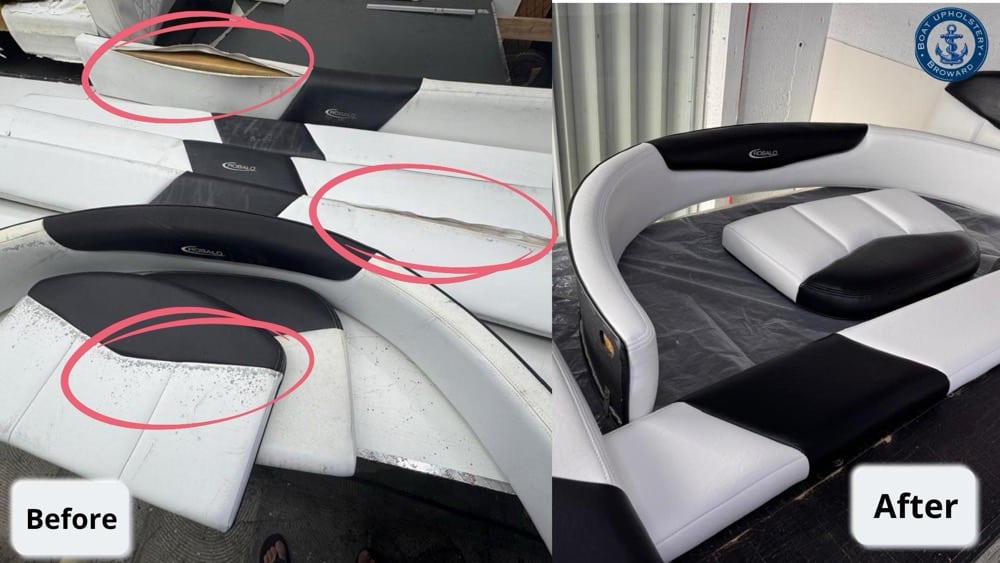
The most vulnerable cushion on almost every Robalo model is the forward bow bolster.
Why?
Because:
- It has aggressive curvature.
- It uses heavily heat-compressed foam.
- It constantly gets hit by spray and condensation.
- It rarely dries completely.
This foam becomes the slowest-drying section of the entire boat.
Our recommendation — and something we frequently implement — is replacing that specific bolster with Dry Fast marine foam.
Dry Fast foam allows vertical drainage and rapid evaporation. On the bow, this is critical.
We often tell owners:
If you don’t replace everything — at least upgrade the bow bolster.
Front Passenger Seat vs Rear Bench: A Unique Robalo Detail

Another design nuance many people overlook is the difference between the front passenger seat (facing the console) and the rear bench.
On most Robalo models:
- The rear bench is thick, soft, and comfortable.
- It often folds or hides to create fishing space.
- It is engineered for dual functionality.
The front passenger seat, however, is different.
It is typically:
- thinner
- less padded
- built with minimal foam
- non-folding
The likely intention was to preserve deck space. But the result is reduced comfort.
In many of our Robalo projects, we add extra foam to this seat and integrate Double Diamond stitching. This increases thickness, improves ergonomics, and maintains a clean factory look — just better engineered.
Factory Setup vs Structural Upgrade
| Component | Factory Robalo Setup | Our Structural Upgrade |
|---|---|---|
| Foam Thickness | 1.5–2″ (often compressed over time) | 2.5–3″ reinforced structure |
| Foam Type | Heat-pressed standard foam | Marine foam + Dry Fast in high-moisture zones |
| Moisture Management | Plastic-wrapped, slow drying | Open-cell drainage system |
| Vinyl Panels | Black heat-absorbing inserts | Cool-touch light marine vinyl |
| Stitching | Standard nylon | UV-stable PTFE marine thread |
| Mold Resistance | Limited | Anti-microbial + breathable mesh |
This is not cosmetic customization.
This is structural correction.
The Black Vinyl Issue
Another pattern we see repeatedly in Robalo boats is cracking in black vinyl sections.
Black absorbs significantly more heat than white or tan marine vinyl. In Florida’s UV intensity, this accelerates:
- surface brittleness
- seam stress
- micro-splitting
Once that surface breaks, water intrusion begins.
This is often where mold spots originate.
Many of our Robalo redesign projects involve converting black panels to lighter tones — not just for style, but for thermal performance.
Why Mold Appears on White Robalo Seats
The black dots owners often notice on white vinyl are not “dirt.”
They are mold colonies caused by:
- Moisture trapped inside foam
- Limited airflow
- Warm climate
- Vinyl cracking
When we rebuild Robalo cushions, we remove factory plastic wraps, install breathable marine mesh backing, and ensure the foam can actually dry.
Without airflow, no upholstery will survive Florida.
Real Structural Example: Foam Reinforcement
On one recent Robalo restoration, the factory foam measured 2 inches originally but had compressed in areas to roughly 1.5 inches.
We:
- Replaced base foam with 2-inch marine-grade density 50
- Added 0.5-inch foam under diamond stitching
- Brought total structure to nearly 3 inches
- Improved surface stability and tension distribution
The result:
- no surface waves
- no vinyl distortion
- improved long-term resilience
And importantly — no “overbuilt” stiffness.
Refresh Your Boat’s Interior
In Short: What Robalo Owners Should Know
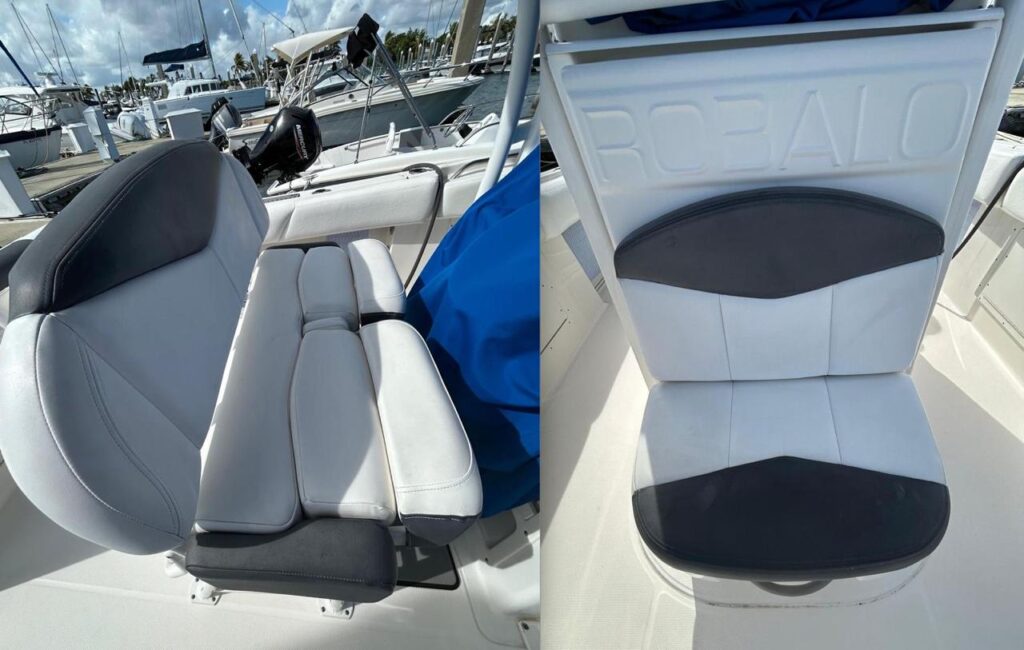
Robalo boats are excellent platforms.
But their upholstery system has three recurring weaknesses:
- Heat absorption from black vinyl
- Moisture retention in compressed foam
- Limited drying capability in bow sections
Address those correctly — and the interior can outperform factory standards for years.
Ignore them — and cracking and mold return.
FAQ for Robalo Owners
Why does black Robalo vinyl crack faster?
Because it absorbs more heat, accelerating UV breakdown and surface drying.
Should I replace factory Robalo foam?
Especially on the bow bolster and front passenger seat — yes.
Is Dry Fast foam necessary?
On high-moisture areas like the bow, absolutely.
Can mold return after reupholstery?
Only if moisture retention is not corrected structurally.
Professional Boat Upholstery
Final Thoughts
Robalo upholstery repair should never be just re-covering seats.
It requires understanding how the factory foam behaves, how Florida’s humidity interacts with materials, and where structural upgrades actually matter.
If done correctly, Robalo seat upholstery can last significantly longer than factory setup — and feel better at the same time.
For professional Robalo upholstery solutions, visit the main page of Boat Upholstery Broward.


